







|
Getting your Trinity Audio player ready...
|
The Ministry of Gender, Children and Social Protection is taking steps to amend Ghana’s legal framework to address concerns over the difference between the legal age of consent to sexual activity and the legal age of marriage.
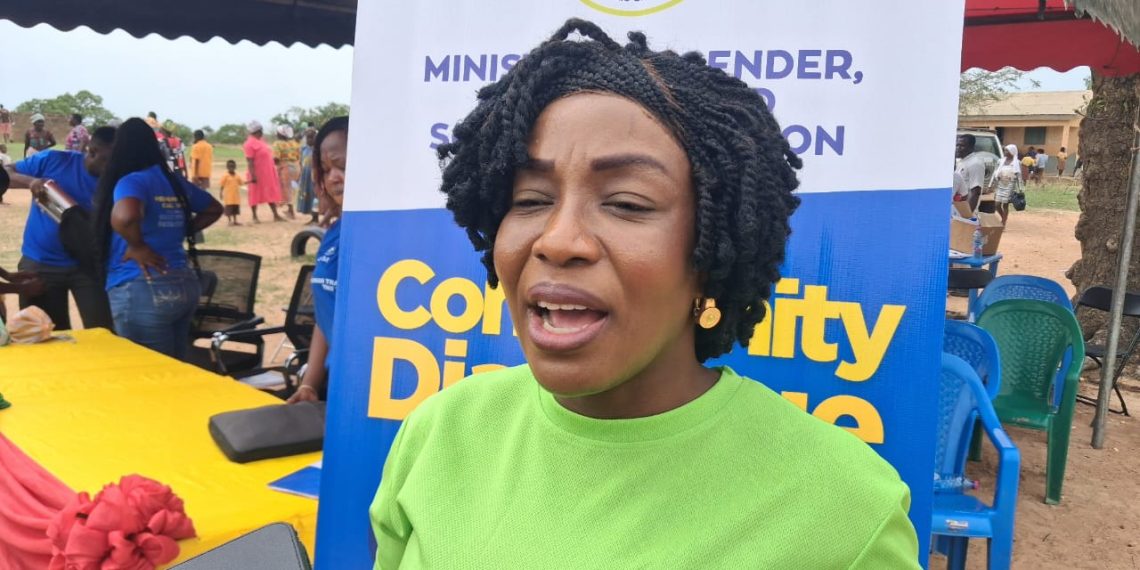
This was disclosed by Francisca Atuluk, Director of Social Protection at the Ministry, during an interview with the Ghana News Agency on the sidelines of a community dialogue held at Dachio in the Bolgatanga East District. The event focused on social protection programmes and broader social issues affecting local communities.
Under Ghana’s current laws, the Children’s Act, 1998 (Act 560), sets the legal age of marriage at 18 years, while the Criminal Code, 1960, recognizes 16 years as the age at which an individual can legally consent to sexual activity.
The difference between the two legal thresholds has long generated debate among child rights advocates and other stakeholders, who argue that the inconsistency can create loopholes that expose children—particularly girls—to abuse and contribute to high rates of teenage pregnancy.
In response to these concerns, the Ministry, under the leadership of Agnes Naa Momo Lartey, has established a team to examine the legal inconsistencies and other child protection challenges as part of the ongoing review of the Children’s Act.
Ms. Atuluk, who is a member of the review team, said the Ministry acknowledges the concerns surrounding the current legal provisions and recognizes the difficulties they present in efforts to protect adolescents and reduce teenage pregnancies.
She explained that the Minister has tasked the team with exploring options for harmonising the two legal ages and ensuring that the law aligns with broader child protection and development objectives.
According to her, the Ministry also plans to facilitate extensive public consultations to gather views from stakeholders and build consensus around potential reforms.
She expressed confidence that the ongoing amendment process would provide an opportunity to strengthen legal safeguards for children and adolescents while addressing longstanding concerns about the existing framework.
Ms. Atuluk reaffirmed the Ministry’s commitment to tackling teenage pregnancy and other child welfare challenges through education, social protection programmes, and community awareness campaigns.
She highlighted government initiatives such as the School Feeding Programme, Capitation Grant, Free Senior High School policy, and the distribution of free sanitary pads as interventions aimed at supporting girls’ education and reducing barriers to learning.
As part of the community dialogue activities, the Ministry also facilitated free registration onto the National Health Insurance Scheme for residents to improve access to healthcare services, particularly for vulnerable groups.
The event brought together government officials, traditional leaders, development partners, civil society organisations, and community members to discuss social protection programmes and pressing social issues, including domestic violence, child marriage, teenage pregnancy, human trafficking, and substance abuse.
Source: citinews


