







|
Getting your Trinity Audio player ready...
|
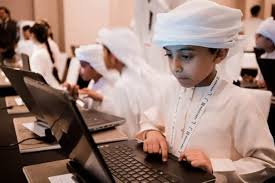
The United Arab Emirates (UAE) has once again positioned itself as a global trailblazer, this
time by integrating Artificial Intelligence (AI) into its national school curriculum from
kindergarten to Grade 12. This bold initiative, starting in the 2025-2026 academic year, is not
just about teaching tech it’s about shaping a future where students are creators, not just
consumers, of AI-driven solutions. For Africa, a continent brimming with untapped potential and
youthful energy, the UAE’s model offers a transformative blueprint for modernizing education
systems and preparing future generations for the digital economy.
Why the UAE’s AI Curriculum is Revolutionary
The UAE’s AI curriculum is a deliberate, future-forward strategy designed to prepare students
for a world increasingly driven by technology. Covering seven core areas, including data and
algorithms, machine learning fundamentals, real-world AI applications, and ethical awareness,
the curriculum ensures students graduate with practical, future-ready skills.
What sets this apart is its seamless integration into existing timetables without additional class
hours. From playful, story-based AI activities in kindergarten to project-based learning for senior
students, the curriculum is tailored to each age group’s developmental stage. By the time
students graduate, they’re not just learning about AI but rather building with it.
What the UAE Is Actually Doing and Why It Matters
Curriculum Integration with national vision
The UAE embeds AI into its education system as part of the National Strategy for Artificial
Intelligence 2031. This ensures alignment with the country’s wider social and economic agenda,
including “We the UAE 2031.” By treating AI as a foundational literacy like math or reading the
UAE prepares students to thrive in a data-driven future economy.
AI as a formal K-12 subject
Starting in the 2025-26 academic year, AI will be introduced across all public schools, from
kindergarten to grade 12. Lessons will cover practical usage, ethical implications, and critical
evaluation of AI-generated outputs. Unlike pilot programs in many countries, this is a
systemwide rollout, ensuring every learner receives equal exposure to AI literacy from an early
age.
Ecosystem delivery (platforms & institutions)
The UAE complements its curriculum reform with a robust ecosystem of digital platforms and
institutions. Alef Education provides adaptive learning tools, Madrasa offers free Arabized
STEM content, and MBZUAI builds advanced talent pipelines. Together, these initiatives bridge K-12 and higher education, ensuring that AI education is accessible, contextualized, and scalable, while promoting innovation through public-private collaboration.
Outcome orientation
Rather than focusing only on inputs like devices or platforms, the UAE measures learning
outcomes. EdTech deployments are evaluated for measurable improvements in student
performance, such as narrowing gaps in mathematics and literacy. By emphasizing results, the
UAE avoids “EdTech hype” and builds a culture of evidence-based innovation, ensuring that AI
integration genuinely enhances teaching and learning quality.
The UAE Blueprint-Transferable Pillars for African Governments
Start with a national AI-in-education policy and roadmap
The UAE anchors its AI curriculum reforms within a broader National AI Strategy 2031, giving
education a clear role in shaping future skills. African governments can replicate this approach
by developing a 10-year AI-in-education roadmap that aligns with AU and national digital
strategies. This roadmap should set measurable milestones for infrastructure, curriculum
integration, teacher training, and student outcomes, ensuring AI adoption is systematic,
sustainable, and not fragmented into isolated, short-term projects.
Make AI literacy a core K-12 entitlement
In the UAE, AI education is mandatory for all K-12 learners, not limited to special programs.
This ensures inclusivity and equal opportunity for every child. African nations can adopt a
phased model starting with digital and data literacy at lower grades, gradually introducing AI
basics, ethics, and applications in secondary school. Embedding AI into core subjects (math,
science, and other subjects) ensures AI skills are universal, not reserved for elite schools or
privileged students.
Invest in teacher capacity first
UAE’s success rests heavily on teacher readiness, supported by training, resources, and
incentives. For Africa, investments in teacher development should precede mass device rollouts.
Governments can launch micro-credential programs in AI pedagogy, ethics, and classroom
application, delivered through teacher training colleges and professional development platforms.
Continuous capacity building, mentoring, and peer-learning communities will empower teachers
to use AI confidently, ensuring integration enhances rather than disrupts classroom practice.
Teachers must be central, not peripheral, to reform.
Governance: ethics, safety, and data protection by design
The UAE makes AI ethics a central part of its K-12 rollout, teaching students about safe and
responsible use. For Africa, this governance dimension is critical: policies must cover student
data protection, academic integrity, algorithmic bias, and parental consent. Embedding digital
citizenship and AI ethics into curricula will prepare learners for responsible participation in a digital economy. Clear regulations and school-based AI policies will prevent misuse, ensuring that AI strengthens trust in education rather than erodes it.
Solve infrastructure as policy, not pilot
The UAE ensures that AI-in-education is backed by reliable infrastructure power, connectivity,
and devices implemented at national scale. Africa can draw lessons by treating school
electrification, broadband, and device availability as policy priorities, not experimental projects.
Governments should use universal service funds, PPPs, and regional initiatives to connect
clusters of schools systematically. Infrastructure investment must be sequenced with curriculum
reform, ensuring AI-enabled learning doesn’t remain a privilege of urban schools but reaches
rural and marginalized communities.
What Africa Can Learn
Africa, with its rapidly growing youth population and increasing tech adoption, is uniquely
positioned to adapt and benefit from a similar model. Here’s how the UAE’s approach can
inspire Africa’s education revolution:
Early Exposure to AI
Introducing AI education at an early age, as seen in the UAE, can play a pivotal role in building
foundational tech skills among African students. By adapting playful and age-appropriate
methods like storytelling, games, and interactive activities young learners can develop curiosity
for technology in a fun and engaging way. Early exposure also helps normalize AI as a tool for
creativity and problem-solving rather than something intimidating. Africa’s education systems
could incorporate AI into existing curricula to teach digital literacy alongside traditional subjects,
ensuring that even the youngest students are equipped with the knowledge to thrive in a rapidly
evolving digital world.
Ethical and Contextual Relevance
The UAE’s curriculum emphasizes ethical awareness, teaching students to consider the societal
impacts and biases of AI. Africa could adapt this approach by addressing ethical challenges
specific to the continent, such as ensuring AI applications are inclusive and culturally relevant.
For example, students could learn how AI can be used responsibly to improve food security,
healthcare access, and environmental conservation. By instilling values of fairness, transparency,
and accountability, Africa can nurture tech-savvy problem-solvers who understand the
importance of responsible innovation. This localized focus ensures that AI education is not just
theoretical but tied to real-world issues that matter to African communities.
Real-World Applications
The UAE’s curriculum encourages students to apply AI knowledge to tackle real-world
problems, a strategy Africa can adopt to address its unique challenges. For instance, students
could use AI to optimize agricultural practices, predict disease outbreaks, or improve
transportation systems. By focusing on project-based learning, Africa’s schools can inspire
students to become solution-oriented innovators who leverage AI to create practical, impactful technologies. This approach not only builds technical skills but also fosters critical thinking and creativity. Teaching students to design AI-driven solutions for local issues would empower them to become active contributors to Africa’s socio-economic development, driving progress from within.
Teacher Training and Infrastructure
The UAE’s success with its AI curriculum relies heavily on well-trained educators and access to
cutting-edge resources. For Africa to replicate this model, governments must invest in teacher
training programs to equip educators with the skills to teach AI effectively. Partnerships with
EdTech companies and international organizations can help provide AI labs, software, and
learning tools to schools. Additionally, infrastructure such as reliable internet access and
electricity must be prioritized to ensure equitable implementation across urban and rural areas.
By empowering teachers and equipping schools with the necessary resources, Africa can create
an environment where AI education thrives for all students.
The Potential Impact on Africa
Adopting an AI-powered curriculum across Africa could have transformative effects, including:
Future-Ready Workforce
By integrating AI education into school curricula, Africa can prepare its youth for the demands
of the global digital economy. As industries worldwide increasingly rely on AI-driven processes,
a workforce equipped with AI skills will be highly sought after. Students trained in AI will not
only be job-ready but will also have the ability to innovate within their respective fields, driving
economic growth and technological advancement. This future-ready workforce will bridge the
gap between Africa and developed economies, positioning the continent as a competitive player
in global markets. Such an initiative could transform Africa’s demographic advantage into a
powerful economic force.
Homegrown Innovations
Localized AI education can empower African students to develop solutions tailored to the
continent’s unique challenges. With knowledge of AI applications, students can create
technologies to address issues such as food insecurity, healthcare access, and climate resilience.
For example, AI could be used to predict crop yields, analyze disease outbreaks, or optimize
renewable energy systems. By encouraging students to innovate with a focus on their
communities, Africa can foster a generation of problem-solvers who think globally but act
locally. Homegrown innovations not only improve quality of life but also reduce reliance on
imported technologies, strengthening Africa’s self-sufficiency and economic independence.
Global Competitiveness
Adopting an AI-powered curriculum can help Africa position itself as a leader in the global tech
landscape. With a generation of AI-literate graduates, the continent can attract investments from
multinational companies seeking skilled talent and new markets. Africa’s ability to produce AI-
driven solutions for global industries such as agriculture, healthcare, and logistics will boost its
economic standing and influence. Furthermore, partnerships with international tech giants could lead to knowledge-sharing and infrastructure development. By embracing AI education, Africa can not only compete but thrive in the global economy, transforming its reputation from a frontier market to a hub of innovation and technological excellence.
Making the Leap
For Africa to replicate this model, bold policy decisions and investments are necessary.
Governments must prioritize education reform, partner with private and international
organizations, and commit to building the infrastructure needed for AI integration. The UAE’s
initiative proves that with vision and commitment, an education system can be reimagined to
meet the demands of tomorrow.
Africa’s youth are its greatest asset, and empowering them with AI skills could unlock
unprecedented opportunities for growth, innovation, and global leadership. The UAE has
provided the roadmap now it’s Africa’s turn to lead its own revolution in education.
Conclusion
The UAE is demonstrating how to move beyond slogans to system-level AI in schooling: start
early, train teachers, redesign assessment, and build inclusive delivery. For African governments,
the question is not whether to integrate AI into education, but how to do so responsibly and at
scale. With smart financing, rigorous safeguards, and Africa–Gulf collaboration, the UAE’s
model can be adapted into an African blueprint that measurably improves learning, inclusion,
and employability turning today’s buzz around AI into tomorrow’s human capital gains.


