






|
Getting your Trinity Audio player ready...
|
The Ghana School Feeding Programme (GSFP) has introduced a real-time digital system to improve monitoring, transparency, and accountability in the delivery of school meals nationwide. The system, known as School Connect, is also expected to facilitate the timely payment of caterers under the programme.
The pilot, which will cover more than 500 schools, is being implemented in partnership with the World Food Programme (WFP) and supported by the Government of the Republic of Korea through Korea International Cooperation Agency (KOICA), which has supplied 284 digital devices, including tablets and laptops.
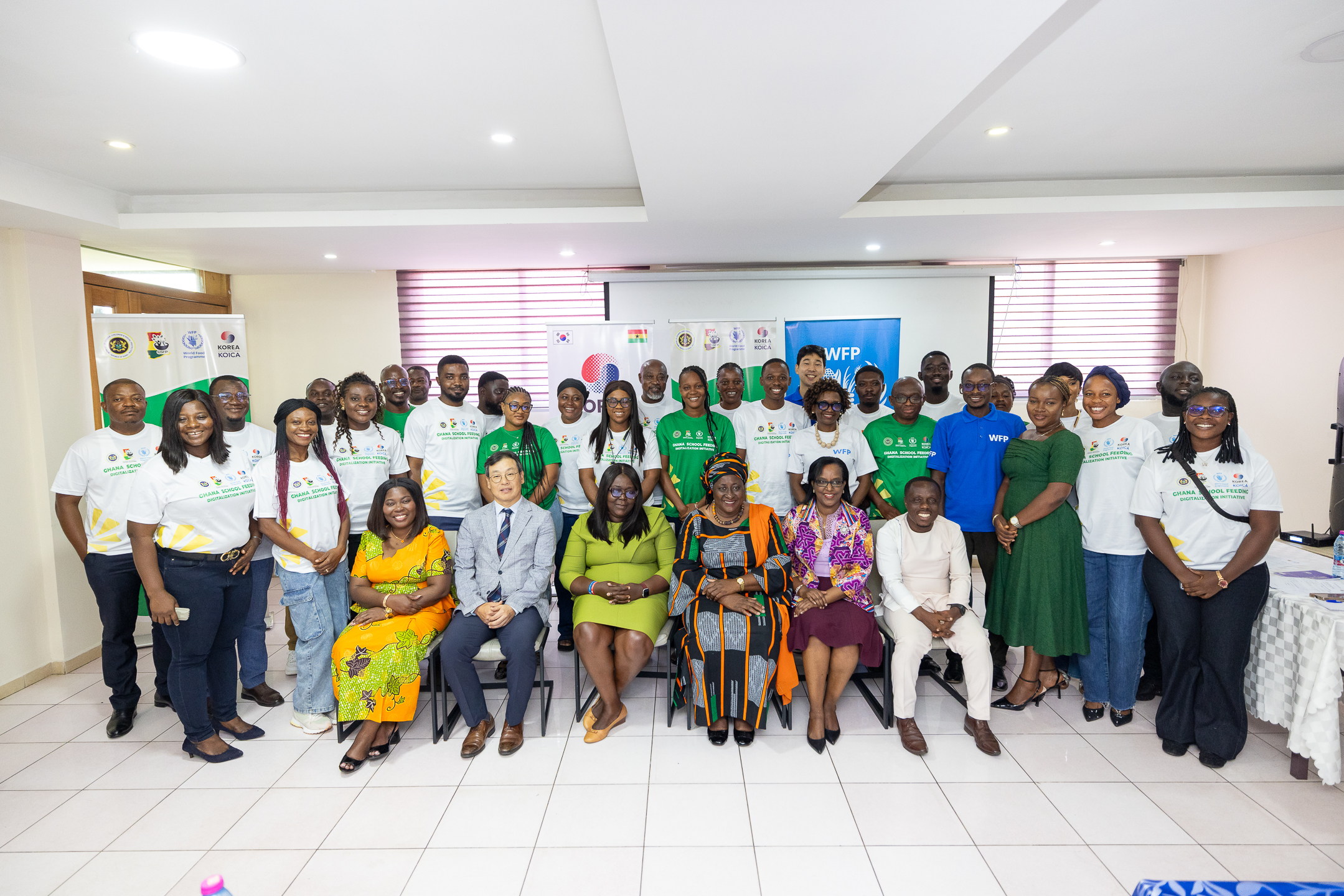
Speaking at a three-day training of trainers at Aburi in the Eastern Region, Ms. Aurore Rusiga, WFP Country Director, said real-time data systems were essential for strengthening programme delivery.
“Reliable data is the foundation of strong programmes. It helps us plan better, monitor effectively, and improve continuously,” she said.
Madam Rusiga said the School Connect platform would enable real-time data collection at the school level on enrolment, attendance, meals served, and food deliveries to improve oversight and decision-making. She said the system would reduce the administrative workload on school staff while improving reporting quality and timeliness.
Madam Rusiga said school feeding remained a key investment in human capital, noting that it is not just a social programme, but an investment in human capital. She added that the programme also supports local economies through the procurement of food from local farmers, thereby creating markets and strengthening community resilience.
Madam Rusiga explained that the pilot would generate lessons to guide the development of a nationally owned digital system aligned with Ghana’s public systems, while WFP would continue to provide technical and capacity support. The GSFP, which has operated for over two decades, provides one hot nutritious meal daily to millions of schoolchildren while supporting local agriculture.
Hajia Fati Forgor, National Coordinator of GSFP, described the rollout as long overdue.
“In 2019, with support from WFP, we introduced a digital system to improve data management and reporting. However, it had gaps, particularly in real-time monitoring and nutrition tracking,” she said.
Hajia Forgor said the new School Connect system addresses those challenges by offering integrated tracking of nutrition, education outcomes, and local food procurement. She said the platform would significantly reduce payment delays through instant data transmission and analysis.
“This is an improved version. We will now be able to monitor meals served to children and ensure caterers adhere to approved menus,” she added.
Madam Constance Baah, Head of the Social Protection Unit at the Ministry of Finance, said weak monitoring systems in the past had led to payment delays and inefficiencies.
“Through this platform, real-time data will be captured at the school level. This marks a significant shift towards a more transparent, efficient, and accountable system,” she said.
Madam Baah said improved data would strengthen budgeting, ensure timely payments, and enhance public financial management.
Mr Donghyun Lee, Country Director of the Government of the Republic of Korea through Korea International Cooperation Agency (KOICA), reaffirmed support for Ghana’s digital social protection initiatives.
“We believe that digital tools can make a real difference by improving transparency, efficiency, and timely decision-making,” he said.
The School Connect platform, developed in 2020 and already in use in over 20 countries, replaces paper-based systems with digital data collection, analysis, and reporting.
Source: GNA