






|
Getting your Trinity Audio player ready...
|
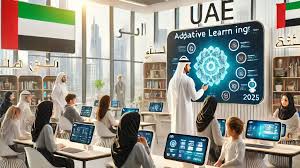
The United Arab Emirates (UAE) has fully integrated Artificial Intelligence (AI) into its national school curriculum from kindergarten to Grade 12. Beginning in the 2025–2026 academic year, the ambitious initiative goes beyond teaching technology . It aims to nurture a generation of innovators capable of creating AI-driven solutions rather than merely consuming them.
For Africa, a continent rich in talent, youthful energy, and untapped potential, the UAE’s approach offers a powerful blueprint for modernising education systems. By embedding AI literacy across all levels of learning, African nations can better prepare future generations for the digital economy, drive local innovation, and close the global skills gap.
Why the UAE’s AI Curriculum is Revolutionary
The UAE’s AI curriculum is a deliberate, future-forward strategy designed to prepare students
for a world increasingly driven by technology. Covering seven core areas, including data and
algorithms, machine learning fundamentals, real-world AI applications, and ethical awareness,
the curriculum ensures students graduate with practical, future-ready skills.
What sets this apart is its seamless integration into existing timetables without additional class
hours. From playful, story-based AI activities in kindergarten to project-based learning for senior
students, the curriculum is tailored to each age group’s developmental stage. By the time
students graduate, they’re not just learning about AI but rather building with it.
What the UAE Is Actually Doing and Why It Matters
Curriculum Integration with national vision
The UAE embeds AI into its education system as part of the National Strategy for Artificial
Intelligence 2031. This ensures alignment with the country’s wider social and economic agenda,
including “We the UAE 2031.” By treating AI as a foundational literacy like math or reading the
UAE prepares students to thrive in a data-driven future economy.
AI as a formal K-12 subject
Starting in the 2025-26 academic year, AI will be introduced across all public schools, from
kindergarten to grade 12. Lessons will cover practical usage, ethical implications, and critical
evaluation of AI-generated outputs. Unlike pilot programs in many countries, this is a
systemwide rollout, ensuring every learner receives equal exposure to AI literacy from an early
age.
Ecosystem delivery (platforms & institutions)
The UAE complements its curriculum reform with a robust ecosystem of digital platforms and
institutions. Alef Education provides adaptive learning tools, Madrasa offers free Arabized
STEM content, and MBZUAI builds advanced talent pipelines. Together, these initiatives bridge K-12 and higher education, ensuring that AI education is accessible, contextualized, and scalable, while promoting innovation through public-private collaboration. Outcome orientation rather than focusing only on inputs like devices or platforms, the UAE measures learning outcomes. EdTech deployments are evaluated for measurable improvements in student performance, such as narrowing gaps in mathematics and literacy. By emphasizing results, theUAE avoids “EdTech hype” and builds a culture of evidence-based innovation, e nsuring that AI integration genuinely enhances teaching and learning quality.
Written By: