






|
Getting your Trinity Audio player ready...
|
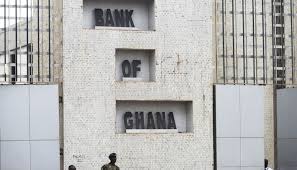
The Bank of Ghana (BoG) has announced a major increase in the minimum capital requirement for institutions seeking to operate as Microfinance Banks, raising the threshold to GH¢100 million.
This directive is part of a broader reform programme unveiled on January 27, 2026, to strengthen the stability, governance, and overall health of Ghana’s microfinance sector.
Under the new rules, all newly licensed Microfinance Banks must meet the GH¢100 million capital requirement, while existing institutions transitioning into the category will be required to raise at least GH¢50 million by December 31, 2026.
The BoG explained that the reforms are meant to address long-standing problems related to weak capital bases, poor governance, and operational inefficiencies in the sector.
The central bank noted that Microfinance Banks will now operate as fully licensed deposit-taking institutions under Act 930, with a focus on serving Micro, Small and Medium Enterprises (MSMEs), as well as both formal and informal clients. Savings and Loans Companies, Finance Houses, Deposit-taking Microfinance Companies and Micro-Credit Companies have been given time to comply and convert into Microfinance Banks through options such as recapitalisation, mergers, asset transfers, or voluntary exit.
Affected institutions must notify the Bank of Ghana of their chosen transition path by June 30, 2026, or face possible regulatory sanctions. The new framework also introduces stricter ownership limits to improve corporate governance and reorganises the sector into four tiers: Microfinance Banks, Community Banks,
Credit Unions and Last-Mile Providers. In addition, ARB Apex Bank will be restructured to provide broader support services. According to the BoG, these reforms are aimed at restoring public confidence and strengthening the sector’s role in financial inclusion and economic development.
Source: 3news