






|
Getting your Trinity Audio player ready...
|
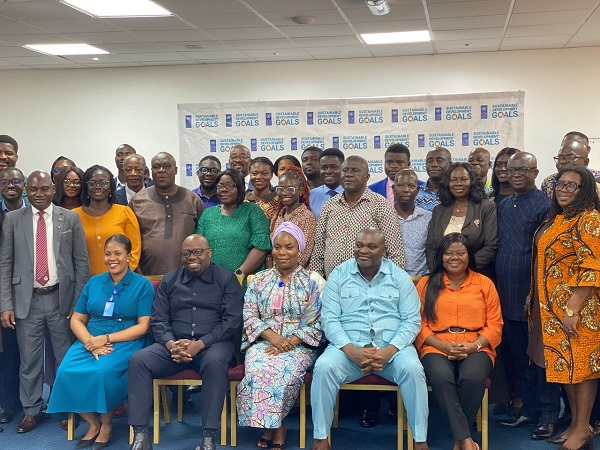
Conservation Alliance Ghana, in collaboration with the Ministry of Environment, Science and Technology and the United Nations Environment Programme World Conservation Monitoring Centre, has launched the National Monitoring Support Initiative (NMSI) Project aimed at improving biodiversity monitoring in Ghana.
The initiative, which will run from 2025 to 2030, seeks to strengthen Ghana’s ability to monitor and report on biodiversity commitments under the Kunming–Montreal Global Biodiversity Framework.
Funding for the project is being provided through the International Climate Initiative of the German Federal Ministry for the Environment, Nature Conservation and Nuclear Safety.
The project will focus on evaluating Ghana’s current biodiversity monitoring systems and institutional capacity, identifying gaps in data collection, coordination, and technical tools, and developing a comprehensive National Biodiversity Monitoring Plan.
It also aims to build technical expertise across institutions and establish a national biodiversity data platform connected to global biodiversity systems.
Speaking at the launch, Suweibatu Adam stressed the importance of accurate biodiversity data in protecting Ghana’s ecosystems amid increasing environmental threats.
She noted that Ghana’s forests, wetlands, savannahs, and coastal areas continue to provide vital ecological and economic benefits but remain under pressure from climate change, land degradation, and human activities.
According to her, the initiative will support evidence-based policymaking, strengthen conservation planning, and help Ghana track progress toward both national and international biodiversity goals.
She added that the project aligns with Ghana’s commitments under the Convention on Biological Diversity and will support the implementation of the country’s revised National Biodiversity Strategy and Action Plan.
Madam Suweibatu further emphasised the need for collaboration among government agencies, academic institutions, civil society groups, local communities, and development partners to ensure the success of the initiative.
Meanwhile, Yaw Osei-Owusu said the project is expected to significantly improve Ghana’s systems for tracking biodiversity targets by 2030.
He explained that institutions such as the Environmental Protection Agency and the Forestry Commission, alongside universities and development partners, would play important roles in implementation.
Dr Osei-Owusu disclosed that the project’s immediate priorities include conducting a national capacity assessment and developing a comprehensive biodiversity monitoring plan before the end of the year to guide future actions.
He expressed confidence that the initiative would eventually establish a strong national biodiversity monitoring system capable of supporting Ghana’s long-term environmental and conservation objectives.
Source: joynews