






|
Getting your Trinity Audio player ready...
|
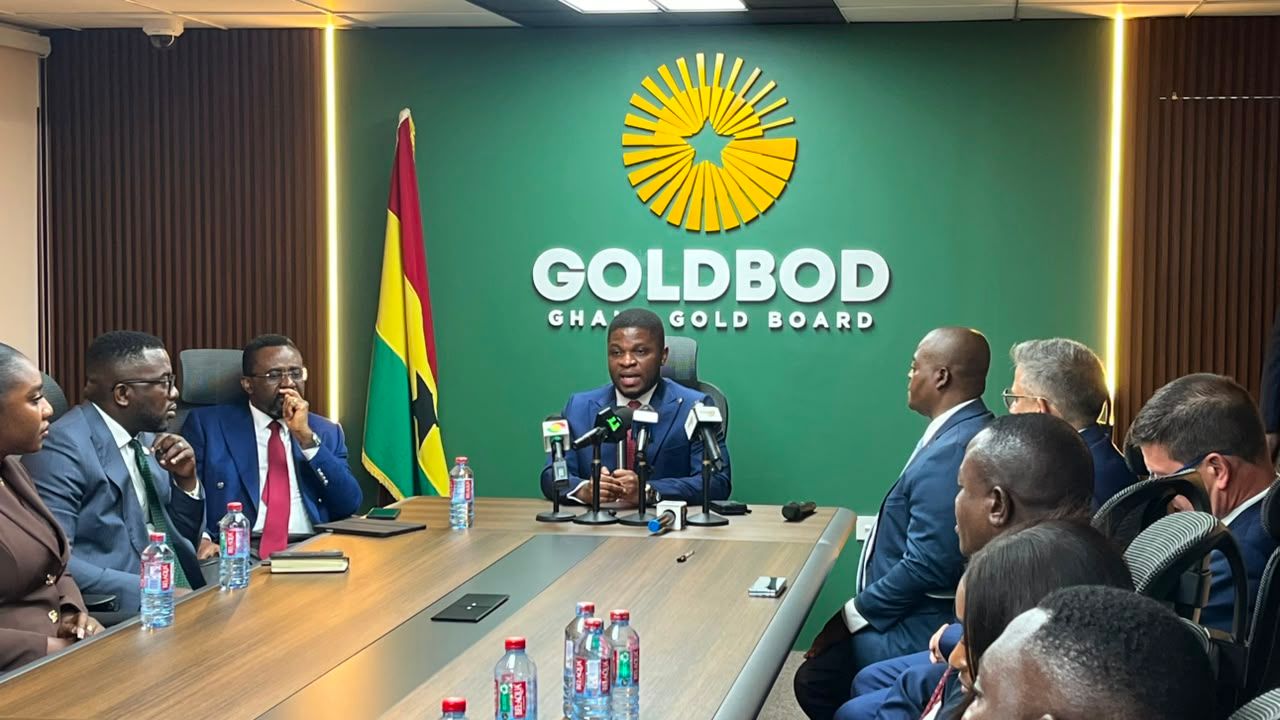
Ghana has taken a significant step toward increasing local mineral processing following the signing of a gold refining agreement between the Ghana Gold Board and Royal Ghana Gold Refinery. The deal is aimed at strengthening domestic gold refining capacity and reducing the export of unprocessed minerals.
The agreement was signed on Monday at a ceremony attended by officials from the Bank of Ghana. Speaking at the event, Chief Executive Officer of the Gold Board, Sammy Gyamfi, said the initiative aligns with President John Dramani Mahama’s vision of ending raw mineral exports by 2030.
He noted that Ghana’s long-standing dependence on exporting unrefined gold has led to lost economic opportunities, despite the country’s status as a major gold producer. According to him, the situation must change to ensure more value is retained locally.
Under the agreement, Royal Ghana Gold Refinery will be authorised to process up to one metric ton of gold weekly, depending on its capacity. The arrangement is expected to support the refining of gold sourced mainly from the small-scale mining sector before export.
Mr. Gyamfi added that the Gold Board currently purchases an average of 2.5 metric tons of gold weekly with the support of the central bank and is engaging large-scale mining companies to supply up to 30 percent of their output for local refining.
He explained that refining gold domestically will help Ghana retain revenues that were previously paid to foreign refineries in countries such as Dubai, India, and Switzerland, while also creating jobs and building technical expertise within the country.
The CEO further stated that the initiative will contribute to Ghana’s efforts to obtain London Bullion Market Association (LBMA) accreditation for local refineries, which would enhance the country’s standing in the global gold market.
The Governor of the Bank of Ghana, Dr. Johnson Asiama, also welcomed the initiative, describing local processing of natural resources as a necessary step for economic transformation. He said similar value addition should extend beyond gold to include cocoa and oil.
He added that the central bank will continue supporting efforts to expand domestic refining capacity, emphasizing benefits such as job creation, increased revenue, and stronger oversight of the mineral value chain. The Bank of Ghana is also reported to hold a minority stake in the refinery.
Managing Director of Royal Ghana Gold Refinery, Eric Frimpong, said the company is ready to begin operations immediately and aims to refine gold to internationally accepted standards, with eventual LBMA accreditation as a long-term goal.
He also expressed support for government plans for a 24-hour economy, stating that the refinery intends to operate continuously to boost productivity and employment.
Officials indicated that refining could begin as early as next week, with the first gold bars expected shortly after initial deliveries. The agreement marks Ghana’s second gold refining partnership, following an earlier deal with Gold Coast Refinery, as part of efforts to position the country as a regional hub for mineral value addition.
Source: 3news