



|
Getting your Trinity Audio player ready...
|
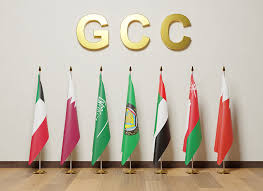
The Gulf Cooperation Council (GCC) — comprising Qatar, Saudi Arabia, the United Arab Emirates (UAE), Oman, Bahrain, and Kuwait — is undergoing a profound economic and strategic transformation. Once defined almost exclusively by oil wealth, the region is rapidly repositioning itself as a global hub for technology, renewable energy, capital formation, logistics, and high-value infrastructure.
With a combined nominal GDP in the low trillions of dollars and a population projected to reach 61.2 million by the end of 2024, the GCC is leveraging its size, youthful demographics, and strategic investments to shape a new era of global relevance. This shift is anchored in bold long-term national strategies — including Saudi Arabia’s Vision 2030, the UAE Centennial Plan and AI Strategy 2031, and the Qatar National Vision — which collectively aim to diversify economic structures and accelerate innovation.
Several indicators point to this emerging renaissance: expanding non-oil GDP across the bloc, rising venture capital activity, fast-growing technology ecosystems, and some of the world’s most ambitious renewable energy commitments. Together, these trends signal a region moving confidently beyond hydrocarbons toward a future defined by digital transformation, sustainable development, and global economic influence.
From hydrocarbons to hybrid economies: the macroeconomic picture
The GCC’s economic narrative in the 2020s is one of managed transition. While hydrocarbons
remain strategically important revenues, fiscal buffers, global energy market role, non-oil
sectors; finance, construction, tourism, logistics, manufacturing, and digital services are
capturing a much larger share of activity. Across the bloc, real GDP growth is projected to
strengthen in the medium term as non-oil expansion offsets oil-sector fluctuations; multilateral
forecasts show GDP growth accelerating into the mid-2020s as diversification policies take hold.
By aggregated nominal measures, the GCC’s combined GDP is measured in the low-to-mid
trillions of U.S. dollars where recent datasets put the bloc’s total nominal GDP above $3 trillion.
At the country level, IMF WEO tables (2025 vintage) show Saudi Arabia and the UAE as the
region’s largest economies; Saudi ~ $1.08 trillion nominal; UAE ~ $548.6 billion, with Qatar,
Kuwait, Oman and Bahrain making up the remainder. These figures underline the scale of capital
and market that national plans can mobilize for structural transformation.
Financial scale (multi-trillion GDP) plus sovereign balance sheets enable long-horizon
investments in technology, infrastructure and green energy that typical emerging economies
cannot match with accelerating structural change.
Demographics and human capital: population growth, urbanization, and skills
GCC population dynamics are distinctive: rapid urbanization, sizeable expatriate communities,
and a young working-age cohort in several member states. Official GCC-Stat reporting placed
the total population at 61.2 million at end-2024, reflecting steady in-migration and demographic
growth. That population, concentrated in metropolitan corridors (Riyadh, Dubai/Abu Dhabi,
Doha, Kuwait City, Manama, Muscat), is the demand base for large-scale digital services,
consumer markets, and talent pools for tech ecosystems. Governments are investing heavily in higher education, vocational training, and nationalization programs such as Saudization, Emiratization, etc. to shift labour market structures and increase domestic participation in higher-value economic activity.
Technology, AI and startup ecosystems: accelerating innovation
The GCC has doubled down on technology as a cornerstone of future competitiveness. National
AI strategies notably the UAE’s AI Strategy 2031 and large national programs are designed to
integrate AI into government services, health, education, and industry. The UAE’s formal
national AI program is explicit about using AI to lift economic productivity and government
efficiency.
Venture capital and startup activity are also rising. PwC and regional VC trackers report that the
GCC’s VC ecosystem grew rapidly between 2020-2024 and that the number of early-stage deals
hit record levels in 2024 despite global risk-off sentiment reflecting a maturation of local
ecosystems and improved deal flow. Estimates show GCC VC deployment reaching in the low
billions (PwC reporting ~$1.7bn in deployed capital over a recent multi-year stretch), while
country-level activity notably Saudi Arabia and the UAE surged into 2024-2025. Saudi Arabia
alone reported a strong VC performance in early-2025. A deeper venture ecosystem plus national AI roadmaps creates a virtuous cycle startups scale, talent accumulates, and governments expedite digital transformation through procurement and regulatory sandboxes.
Sustainability and energy transition: a renewable Renaissance
GCC states are making headline commitments to renewables and low-carbon fuels. Saudi Vision
2030 and related programs include multi-gigawatt renewable targets tens of GW by 2030, with
flagship projects such as NEOM’s green hydrogen ambitions and large-scale solar fields. The
International Energy Agency and regional analyses document rapid increases in planned and
contracted renewable capacity across the Gulf. Abu Dhabi and Saudi plans include several dozen
GW of solar capacity across the coming decade; Saudi plots near-term targets on the order of 50-
130 GW depending on the source and scope of the program.
Additionally, Gulf utilities and sovereign investors are exploring green hydrogen, carbon
capture, and low-emission petrochemical production, a hybrid approach that leverages existing
hydrocarbon industry advantages, infrastructure, capital, engineering to pivot low-carbon value
chains. Fitch and other credit analysts note that renewables targets are already boosting
electricity investment pipelines, which will reshape energy systems and create industrial-scale
demand for local content and services.
Finance, capital and sovereign positioning
GCC sovereign balance sheets, Sovereign Wealth Funds (SWFs), government development
funds, and large state-owned enterprises remain central actors. Through these vehicles,
governments are underwriting innovation, acquiring foreign technology, and co-investing in domestic champions. While the precise sizes of funds are variable and occasionally contested,
their activity from direct investments in global tech firms to anchor funding for domestic startups
has been a significant catalyst for regional transformation.
At the same time, public financial management is shifting: governments are improving fiscal
transparency and creating private-sector friendly frameworks for special economic zones and
regulatory reforms in order to crowd in private capital.
Geopolitical positioning and soft power
GCC states have re-engineered foreign economic policy to use investment, diplomatic outreach,
and event diplomacy (Expo, World Cup, COP-level participation, hosting summits) as
instruments of soft power. This repositioning helps attract talent and capital from Europe, Asia
and North America, while enabling domestic reforms to be benchmarked against global best
practice.
The ambition of Qatar: growth, gas, and a knowledge pivot
Qatar’s ambition is visible in a deliberate shift from a resource-rich state to a diversified,
knowledge-led economy. The IMF’s 2024/25 Article IV work shows continued positive growth
roughly ~2% real GDP growth in 2024-25 as the country leverages LNG revenues to finance
diversification. Qatar’s Third National Development Strategy (NDS-3) and Qatar National
Vision 2030 steer public investment into higher education, research, digital infrastructure and
low-carbon projects. PwC’s Qatar Economy Watch highlights the country’s focus on
decarbonization and knowledge industries as core pillars. Qatar still ranks among the world’s
largest LNG exporters, a structural cash engine, and those revenues are explicitly being
channelled into education, healthcare, and infrastructure as the bedrock for human-centered
innovation and tech adoption.
The power of Saudi Arabia: scale, execution, and structural transformation
Saudi Arabia’s “power” is both economic and programmatic. Under Vision 2030 the kingdom
has dramatically increased non-oil revenues, expanded sovereign investments, and launched
megaprojects (NEOM, Qiddiya, major airport and transport infrastructure). Official Vision 2030
reporting and recent public documents show major fiscal and strategic milestones increases in
non-oil receipts, substantial state investment via the Public Investment Fund (PIF), and explicit
renewable and industrial targets. Saudi renewable ambitions are huge; studies and national plans
point to multi-GW solar and wind rollouts and green hydrogen pilot investments, with national
targets expanding through the 2030 horizon. These moves combine capital scale, project
engineering capacity and direct state coordination of fast, large-scale structural change.
The innovation of the UAE: AI, hubs, and global R&D positioning
The UAE positions itself as the GCC’s innovation engine. It ranks strongly in regional
innovation indices; UAE performance in the Global Innovation Index and detailed country
profiles show continued leadership across the sub-region and has a national AI Strategy (AI
Strategy 2031) that estimates substantial GDP uplift from AI adoption. The country has attracted
major AI investments (public and private), launched national research universities and AI
institutes, and built regulatory sandboxes and “free zones” that speed tech entrepreneurship and
foreign R&D partnerships. Media and industry reports also flag blockbuster private capital flows
(state-backed investments and global partnerships) into AI campuses, LLM partnerships and chip
access deals.
The beauty of Oman: tourism, natural assets, and cultural sustainability
Oman’s “beauty” is literal and strategic: natural coastlines, mountains (Jebel Akhdar), wadis, and
a strong cultural tourism brand. Recent national statistics and tourism reporting show tourist
arrivals stabilizing at roughly 3.8-4.0 million visitors (2023-2024), with tourism receipts and
hotel revenues rising and direct tourism value-added increasing year-on-year. Oman’s tourism
strategy aims to scale high-value, culturally respectful, and nature-based tourism while linking
tourism to local SME growth and regional jobs. This emphasis on protected landscapes and
cultural authenticity positions tourism as both an economic engine and a sustainability platform.
The organisation of Bahrain: financial services, regulation, and enabling frameworks
Bahrain’s comparative advantage is institutional: it is one of the region’s earliest financial-
services hubs and continues to position itself as a cost-efficient, well-regulated gateway for
fintech, insurance and regional financial services. Bahrain’s 2024 Economic Report and recent
sovereign and credit commentary document steady GDP growth (~2-3% range recently) and
ongoing reform to public finances and the regulatory environment; rating agencies highlight
fiscal pressures but also policy steps to stabilize and modernize the economy. Bahrain’s focus on
regulatory clarity, fintech sandboxes, financial cluster policies and business services creates an
organized, lower-cost platform for both regional banks and new digital financial firms.
The potential of Kuwait: reserves, reform leverage, and selective modernization
Kuwait’s defining advantage is resource depth and fiscal capacity: it holds one of the world’s
largest proven oil reserves, providing persistent fiscal optionality to invest in modernization if
governance and reform momentum align. Recent reporting notes that Kuwait is at a potential
inflection point of new public debt laws, pledges for infrastructure projects; ports, airports and
nascent reform packages aim to unlock private investment and diversify non-oil growth.
Observers note strong per-capita wealth but also the urgent need for clearer reform sequencing to
fully convert resource wealth into durable private-sector-led growth.
Conclusion why “Cradle of a New World Renaissance” fits
The GCC combines rare attributes: large financial firepower, decisive political will, concentrated
urban populations, and a clear strategic pivot toward technology and sustainability. Recent data
points a multi-trillion-dollar regional economy, a population of over 61 million (end-2024),
rising VC activity and explicit national AI and renewables strategies all show the region is not
merely declaring ambition, it is allocating capital and policy to realize it. The scale of public
investment and the rapid creation of enabling institutions make the “renaissance” metaphor
useful: the region is cultivating new industries, new cultural assets, and new global linkages.
Whether this transformation will be socially equitable and environmentally resilient depends on
execution, governance, and inclusivity but the material foundations are in place.