






|
Getting your Trinity Audio player ready...
|
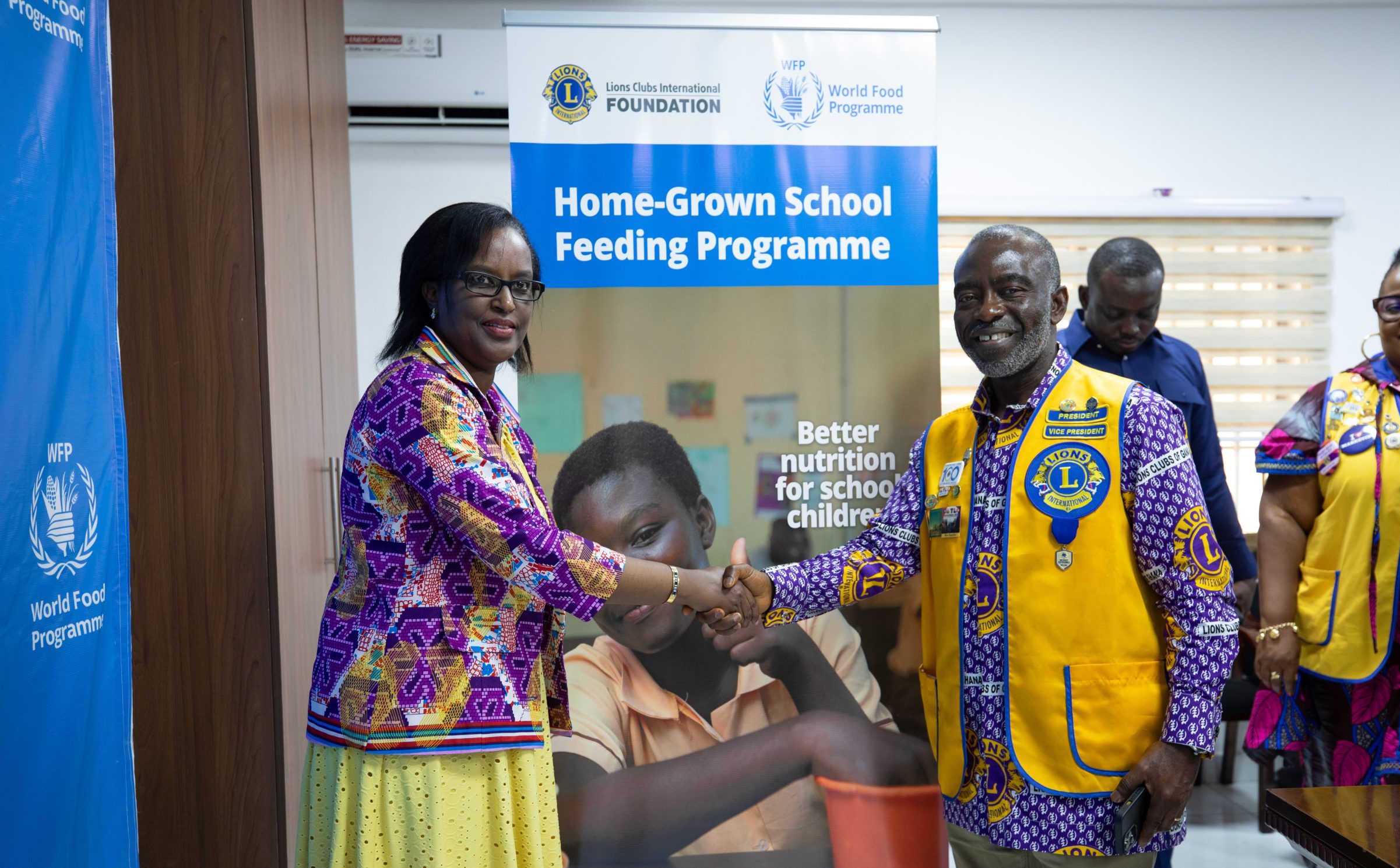
The United Nations World Food Programme (WFP), in partnership with the Lions Clubs International Foundation (LCIF) and World Food Program USA, today launched a pilot Home-Grown School Feeding (HGSF) project aimed at improving child nutrition and strengthening local food systems in two districts in Ghana.
The pilot programme will be implemented in Karaga District in the Northern Region and Sekyere Central in the Ashanti Region, reaching 33,598 kindergarten and primary school children in approximately 100 selected schools. Through this project, children will receive safe, nutritious, and locally produced meals daily, helping to reduce short-term hunger and improve learning outcomes.
At the core of the project is a home‑grown approach, which prioritizes the procurement of food from local farmers and suppliers. By building structured linkages between schools, smallholder farmers, aggregators, and local markets, the programme not only enhances children’s diets but also creates reliable demand for locally produced food, strengthens rural livelihoods, and stimulates local economies.
“This partnership between the World Food Program USA and the Lions Clubs International Foundation is both timely and impactful, as it strengthens the home-grown school feeding approach by increasing farmer participation, creating market opportunities, and enabling schools to provide diverse and nutritious meals” said Ms. Aurore Rusiga, WFP Ghana Country Director and Representative.
Funded jointly by LCIF and World Food Program USA, the initiative underscores a shared commitment to addressing child hunger, improving nutrition, and supporting inclusive economic development. The project is also aligned with national priorities to enhance the effectiveness and sustainability of the Ghana School Feeding Programme (GSFP).
A representative from the Lions Clubs International Foundation highlighted the importance of the partnership:
“Lions are driven by service, and for generations, our members have worked with communities around the world to help children and families access the nutritious food they need,” said Fabrício Oliveira, chairperson of Lions Clubs International Foundation. “We are proud to expand our collaboration with WFP, strengthening our shared commitment to people facing hunger and food insecurity by serving side by side and delivering sustainable solutions that nourish children today while strengthening local farmers and communities for the future.”
The project will be implemented in close collaboration with Lions Club District 418 and key government stakeholders, including the Ministry of Gender, Children and Social Protection and the Ghana School Feeding Programme Secretariat, ensuring strong national ownership and coordination.
Through this pilot, WFP and partners aim to demonstrate a scalable model that not only improves access to nutritious meals for schoolchildren but also strengthens local food systems and contributes to long-term community resilience.
LCIF and World Food Program USA first supported WFP homegrown school feeding through a four-country pilot project ending in 2025. Today’s announcement is part of a new three-year, $12 million joint commitment, with both organizations contributing $2 million each year.
World Food Program USA is a nonprofit organization based in the United States that supports WFP’s mission by mobilizing American policymakers, businesses and individuals to advance the global movement to end hunger. LCIF is the global foundation supporting 1.4 million members of Lions Clubs International through grant funds that empower their service at home and around the world.
About UNWFP
The United Nations World Food Programme is the world’s largest humanitarian organization saving lives in emergencies and using food assistance to build a pathway to peace, stability and prosperity for people recovering from conflict, disasters and the impact of climate change.