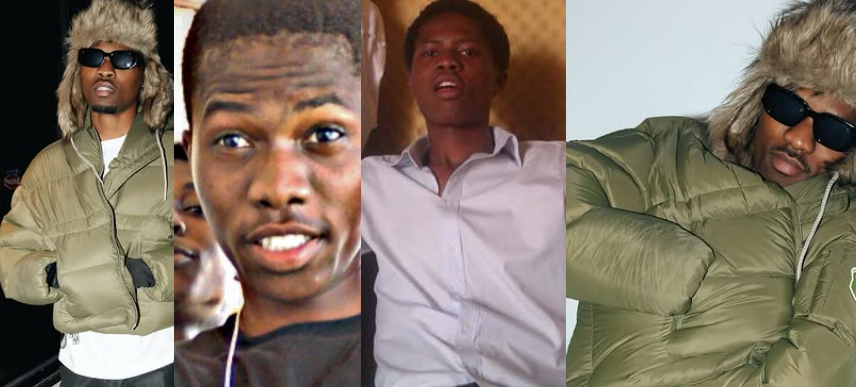
Ghanaian rapper Kwesi Arthur is dropping breadcrumbs that many fans are missing in the ongoing saga with his former label Ground Up Chale (GUC) and CEO Glen Boateng. Through a series of social media posts tied to his independent project #RedemptionValley Tape (early access via Even.biz, full DSP release anticipated soon), Kwesi is methodically sharing the original photos used (or inspiring) the project’s cover art collage. By captioning each with exact details where, when, and how the pictures were taken he’s asserting ownership over his personal life story and challenging claims that GUC “owns” these images.
The cover art is a powerful black-and-white montage blending youthful dreams, street life, and early music grind into a narrative of redemption. Kwesi’s recent shares reveal these aren’t just random throwbacks they’re deeply personal archives from his pre-fame days in Tema, far removed from any label-commissioned shoots.
Photo 1: Childhood Football Dreams at Redemption Park
In one post, Kwesi shared a group photo of young boys on a dusty pitch, captioned:
“Had dreams of playing football in Europe when I was little, I could do a little one two. I was always the kid playing with the older boys for C9 Redemption park. They’d call me up to play for them.
This picture was taken at C8 No.2 School park. Got together with a few players from our youth team Ajax C7, Saint Joseph, C7 AC Milan among others and won the tournament in a day on some frɛ frɛ kɔbɔ tin.
Korley, King, Kabu, Ozigi, Shangama, Nii Kwaw, Joshua, me then Razak fight like 10 million times but we still kick it.
Can you spot me in this?
#RedemptionValley”
This snapshot captures Kwesi as a kid hustling on Tema Community 9 (C9) Redemption Park and C8 No.2 School park grounds informal tournaments with local youth teams like Ajax C7 and C7 AC Milan. The slang “frɛ frɛ kɔbɔ tin” nods to casual, high-energy street football. It’s a pure personal memory: likely snapped by a friend, family member, or casually during games, long before any professional photography entered his life. The project’s title Redemption Valley echoes this very park his “valley” of early struggles and unfulfilled football aspirations turned into musical redemption.
Photo 2: Entry-Level Hustle at Xlimit Studios
Kwesi followed up with another revealing shot:
“At 17, I got a job at Xlimit Studios. I started out as a cleaner of the space, and running errands for the owner Kobbie, and artists who’d come work here. Over time I was managing the studio. This is where I learnt how to make beats and record folks. I had to be around music somehow and still earn a living and this was the way for me. Shaker in the cut.
#RedemptionValley”
Here, a young Kwesi is pictured in what appears to be a casual studio environment—possibly self-shot or taken by colleagues during his early days grinding at Xlimit Studios. Starting as a cleaner/errand runner for owner Kobbie, he leveled up to managing the space, teaching himself production and engineering. Again, this predates his 2016 GUC signing and stems from personal initiative, not label funding.
Photo 3: Post-Session Moment Outside XLC Studios
“Circa 2014. Right outside XLC studios after a session with Orhene. Tabil made the beat, I did the recording.
#RedemptionValley”
This circa-2014 photo shows Kwesi outside XLC Studios post-recording session with collaborator Orhene (beat by Tabil, Kwesi on engineering duties). It’s another grassroots moment—likely a quick snap right after wrapping work, capturing his early behind-the-scenes role in the scene.
The Core Message: Personal vs. “Commissioned” Assets
Kwesi’s point is clear: these images are from his own life—childhood parks, self-made studio hustle, pre-label sessions—taken informally (friends, phone, or casual settings), not paid for or commissioned by GUC. By publicly documenting origins, locations, and contexts, he’s building a case that these fall under his right of publicity and personal archives, not label-owned intellectual property.
GUC’s stance remains that their dispute targets specific visuals and footage commissioned and paid for during his signed period (e.g., music video stills or promo shoots under work-for-hire terms), not his entire likeness or pre-2016 personal photos. They’ve pursued legal action, including a defamation suit over his initial claims of extortion ($150,000 demand) and threats, while clarifying they don’t claim perpetual ownership of his image/brand.
Yet Kwesi’s strategy—releasing originals one by one with detailed backstories—suggests he’s distinguishing: “These aren’t your paid assets; these are my memories.” Supporters see it as a masterclass in narrative control, with some fans noting he’s “explaining the images one by one to show Glen he owes him nothing.”
Broader Takeaway for Ghana’s Music Scene
This isn’t just beef it’s a spotlight on artist-label contracts in Ghana: vague IP clauses, work-for-hire pitfalls, and how personal photos can get entangled post-departure. Kwesi, post-Son of Jacob (2022), is operating independently and using Redemption Valley to reclaim his story visually and thematically.
As the project builds hype (with fans tracking countdowns and solidarity posts), Kwesi’s message resonates: redemption means owning your past parks, studios, struggles, and all. Don’t sleep on it. Stream or pre-save Redemption Valley and watch how one man’s throwbacks become a powerful statement.
CHECK THIS: $150,000 for His Own Face? Breaking Down the Image & Ownership Claims in the Kwesi Arthur vs. Ground Up Chale Dispute
source: kaknews.com
Send your news stories to