



|
Getting your Trinity Audio player ready...
|
The Africa Continental Foresight Consultations for Resilient Agrifood Systems opened in Nairobi with a strong sense of hope, urgency, and collective responsibility. Organised by the African Union Commission (AUC-DARBE) in collaboration with FARA, CGIAR/ILRI, AUDA-NEPAD, and partners across Africa and the UK, the three-day workshop aims to strengthen the continent’s ability to anticipate and respond to future challenges in its agrifood systems.
The consultations build on the 2025 Kampala CAADP Declaration, which calls for data-driven, forward-looking approaches to boost food production, resilience, gender equity, and regional market integration. With climate stress, population growth, market instability, and cross-border shocks increasing, foresight is now viewed as essential for long-term planning and investment.
Setting the tone for the day, Ms. Beatrice Egulu of AUC-ARBE stressed that foresight is not just a technical tool but a strategic pillar of Africa’s resilience agenda. She highlighted its central role in the Food Systems Resilience Programme (FSRP) and future CAADP cycles, urging Member States and regional institutions to embed foresight into core governance systems.
Dr. Abdulrazak Ibrahim of FARA followed with an overview of Africa’s foresight evolution—reflecting on more than ten years of capacity development, new foresight methodologies, and the rise of national foresight hubs. He emphasised that Africa is now prepared to consolidate these efforts under a unified AUC-led foresight framework aligned with Agenda 2063.
A keynote address by Dr. Namukolo Covic of CGIAR/ILRI underscored the scientific and nutritional dimensions of Africa’s food challenges. Drawing on data from the Global Nutrition Report and food systems assessments, she outlined the continent’s multiple burdens—from malnutrition and diet-related diseases to rising food insecurity. She emphasised that foresight is vital for guiding investment, adjusting current transformation efforts, and accelerating progress across the six Kampala CAADP Commitments.
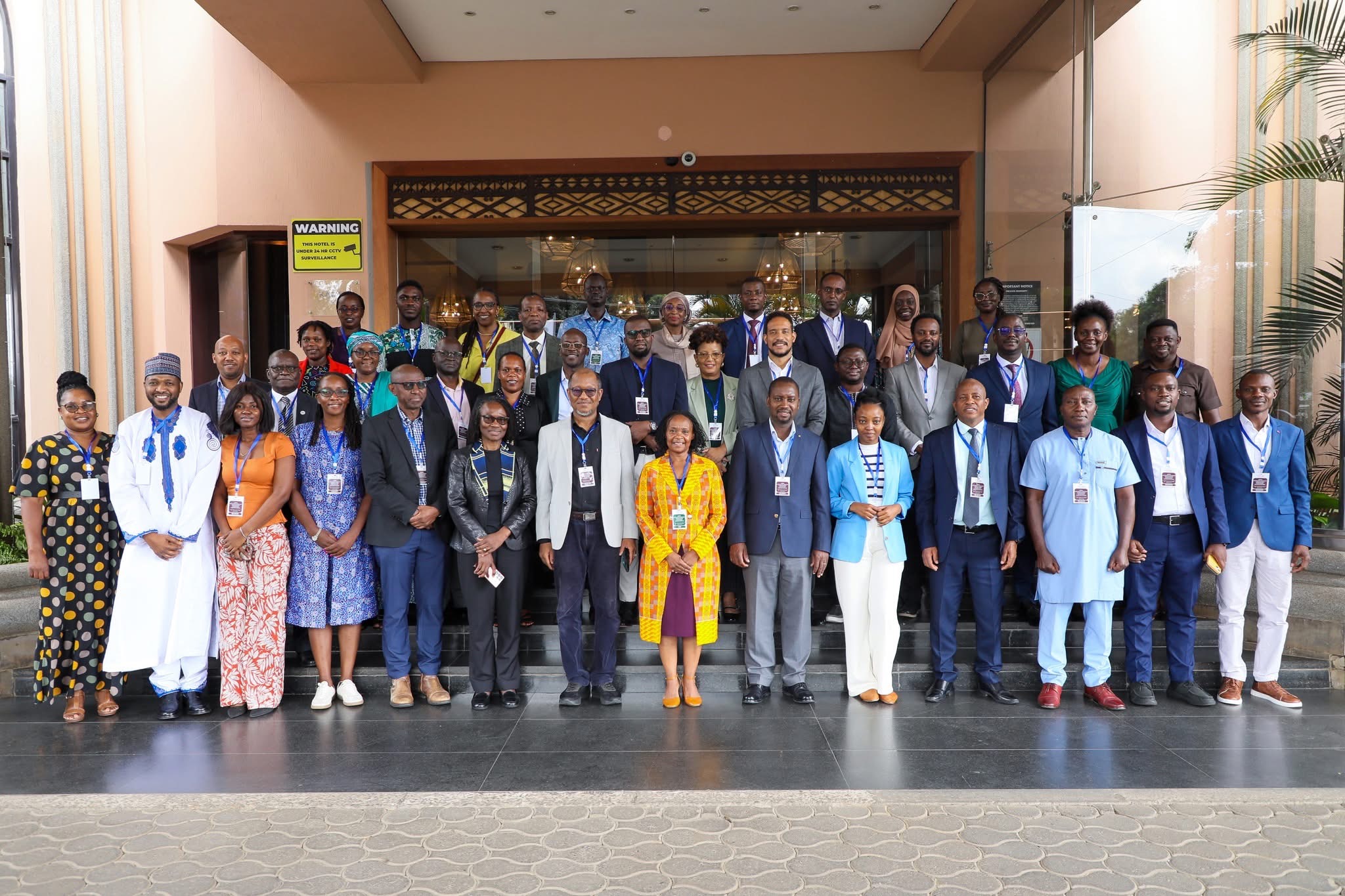
The workshop’s strength was further reflected in its diverse participants—foresight experts, researchers, CGIAR specialists, Africa Foresight Academy practitioners, policymakers, and development partners including teams from Oxford University. Their presence signals a shared objective: building a coordinated African foresight ecosystem to support decision-making at both national and continental levels.
Senior foresight leaders such as Julius Gatune, Olugbenga Adesida, Geci Karuki-Sebina, Wangeci Gitata-Kiriga, and Godfrey Bahiigwa revisited Africa’s early foresight milestones, pointing to both achievements and remaining gaps. Discussions highlighted the need for a permanent institutional home and governance structure to harmonise foresight work across sectors—an aim central to the workshop’s design, which moves from visioning to technical co-creation and roadmap development.
The day ended with an engaging plenary and brainstorming session where participants began drafting Africa’s future foresight agenda. The exchanges were insightful and forward-focused, reflecting a shared belief that Africa must actively shape its future rather than respond reactively to crises.
As Day 1 closed in Nairobi’s Upper Hill, the momentum was unmistakable. Tomorrow’s programme features opening remarks by Commissioner H.E. Moses Vilakati, specialised technical sessions, and the first set of outputs from thematic workgroups. Africa’s foresight community is poised to co-develop a continental roadmap that will guide agrifood transformation for decades.
This initiative builds upon foundations laid under the CAADP-XP4 Programme, a consortium of leading continental and regional agricultural research bodies—FARA, CCARDESA, CORAF, ASARECA, and AFAAS—working to strengthen Africa’s agricultural innovation and resilience.
Source: faraafrica.org
