







|
Getting your Trinity Audio player ready...
|
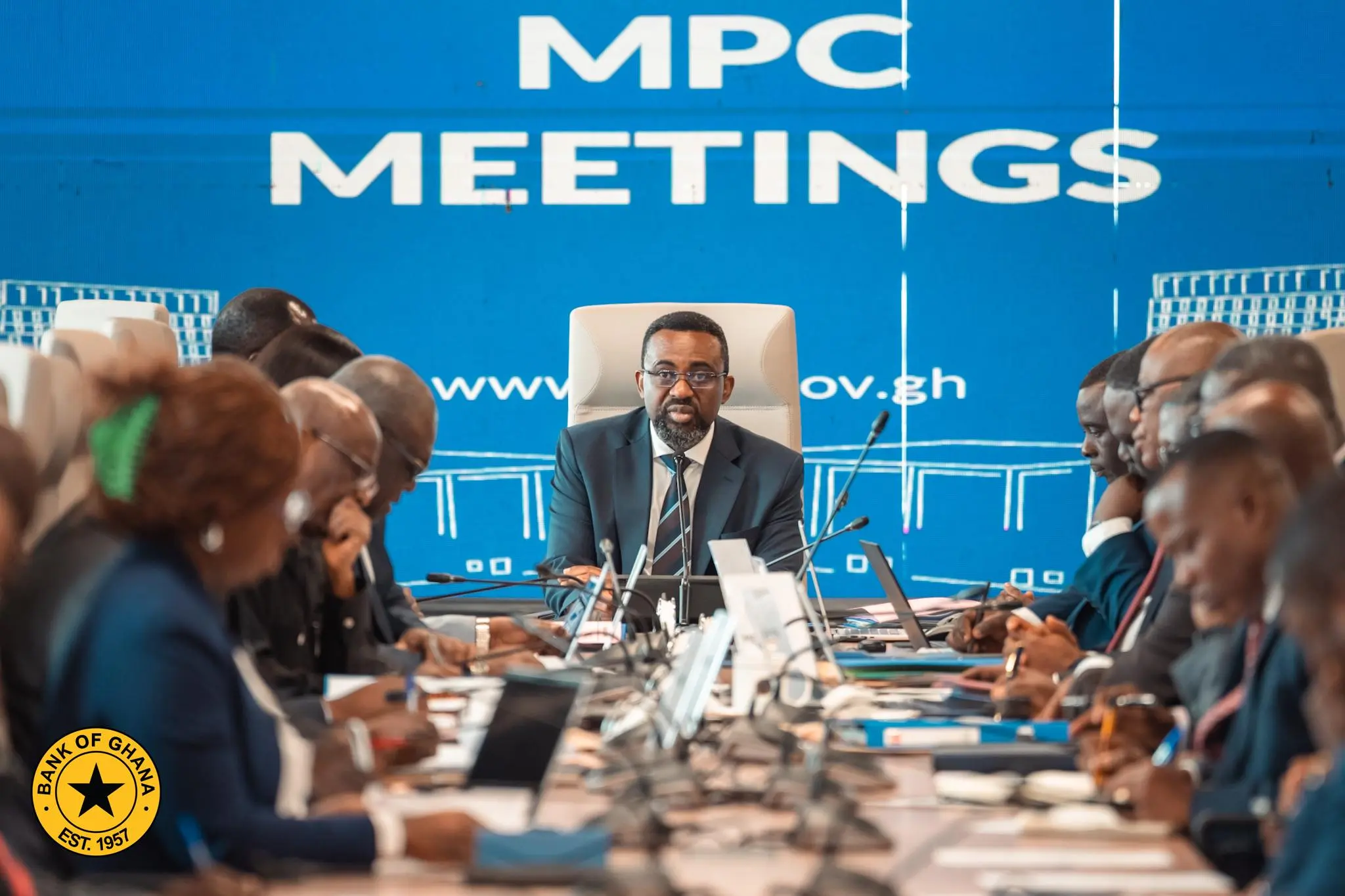
The Bank of Ghana has begun its 129th Regular Meeting of the Monetary Policy Committee (MPC), which will run from Monday, March 16 to Wednesday, March 18, 2026.
The meeting is expected to review recent economic developments and assess the appropriate direction of monetary policy. The deliberations will conclude with a press conference on Wednesday where the committee will announce its policy decision.
During the discussions, the committee, by majority decision, voted to reduce the Monetary Policy Rate by 250 basis points to 15.5 percent.
One MPC member who supported the decision noted that global economic activity remained resilient in 2025 and is expected to expand by about 3.3 percent in 2026. Inflationary pressures across major economies have moderated, leading many central banks to begin easing monetary policy.
The member also pointed out that global financial conditions have improved, supported by a weaker US dollar and declining global yields. However, risks remain, including geopolitical tensions, potential tariff adjustments and volatility in global oil prices.
On the domestic front, the member observed that Ghana’s macroeconomic conditions have continued to improve. Inflation declined for the twelfth consecutive month, reaching 5.4 percent in December 2025. The decline was attributed to exchange rate stability, improved supply conditions and the impact of earlier policy interventions.
Inflation expectations among households, businesses, financial market participants and economic analysts have also fallen, reinforcing the ongoing disinflation trend.
The external sector was also described as strong, supported by a sizeable current account surplus and increased foreign reserves, which have contributed to the strong performance of the Ghanaian currency.
Indicators from the real sector—including GDP growth trends, the Composite Index of Economic Activity (CIEA), the Purchasing Managers’ Index (PMI) and business sentiment indicators—suggest that economic activity continues to expand.
Monetary and financial conditions are also gradually stabilising, with improved liquidity levels and early signs of recovery in private sector credit.
According to the member, risks to the inflation outlook appear broadly balanced. Potential upward pressures may arise from adjustments in utility tariffs, disruptions in agricultural supply and movements in global commodity prices. However, these risks could be offset by downward pressures from a strong local currency, expected reductions in transport fares and lower VAT and fuel prices.
Near-term projections suggest inflation will remain within or below the lower bound of the central bank’s target range.
Given the sustained decline in inflation, anchored expectations and improved external sector performance, the member argued that maintaining the previous level of monetary tightening could unnecessarily slow economic activity and delay the recovery of credit growth.
He therefore supported a moderate easing of the policy stance, noting that current economic conditions provide room for such an adjustment.
The proposed reduction in the policy rate, he said, would help align real interest rates with current inflation dynamics, support business confidence, stimulate lending to the private sector and reinforce the ongoing economic recovery, while keeping inflation within the medium-term target range.
He concluded by voting for a 250 basis point reduction in the policy rate to 15.5 percent, while stressing the committee’s readiness to respond quickly should inflationary risks re-emerge.
Source: 3news


