


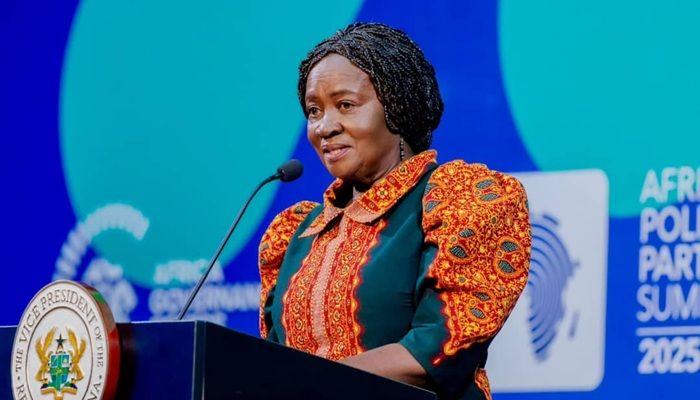
Vice President Professor Naana Jane Opoku-Agyemang has launched Ghana’s National Cultural Policy, describing culture as a key driver of inclusive development, job creation, social cohesion, and national identity.
The launch took place at the National Theatre in Accra on Monday, June 9, 2026, marking what she described as a major milestone in efforts to preserve Ghana’s cultural heritage while strengthening the creative and cultural industries.
She explained that the policy aligns with government’s broader development agenda by promoting inclusive growth, expanding decent job opportunities, improving education, and reducing inequality.
“By safeguarding our traditions and empowering our creative sector, we are fostering inclusive growth, creating decent jobs, enhancing education and reducing inequalities,” she said.
The Vice President noted that the policy also supports the United Nations Sustainable Development Goals (SDGs) and the African Union’s Agenda 2063, which envisions a continent with a strong cultural identity, shared values, and heritage.
She highlighted Ghana’s increasing role in cultural diplomacy, referencing the country’s advocacy at the United Nations on the legacy of the transatlantic slave trade and its impact on African societies.
According to her, Ghana’s historic forts, castles, and slave dungeons remain powerful reminders of that history and reinforce the need for continued global dialogue on restitution, reparations, justice, and dignity.
“Culture is not only about celebration; it is also about justice, dignity and our collective responsibility to confront the painful legacies of slavery and colonialism,” she stated.
Professor Opoku-Agyemang also pointed to growing international recognition of Ghana’s cultural assets, including highlife music and the protection of indigenous products through geographical indication status.
“Our cultural expressions are not only treasures of Ghana; they are gifts to the world,” she added.
She stressed the importance of multilingualism and cultural exchange in an increasingly interconnected world, urging Ghanaians to embrace language learning to strengthen social cohesion and global engagement.
On technology, she said innovations such as artificial intelligence present opportunities to digitise cultural heritage, preserve indigenous languages, and expand access for creative industries, while cautioning that such tools must be guided by Ghanaian values and national priorities.
The Vice President also acknowledged the contributions of development partners including UNESCO, the European Union, civil society organisations, the private sector, and the Ghanaian diaspora in supporting cultural development.
She revealed that Ghana has made progress under UNESCO’s Culture 2030 Indicators framework, which will help measure the contribution of culture to national development through data-driven policymaking.
She further announced plans to strengthen the film industry through a Film Development Fund, supported by seed financing, to boost production in areas such as documentaries and creative storytelling.
Calling for collective action, she urged government institutions, traditional leaders, religious bodies, youth, the private sector, and the diaspora to collaborate in unlocking the full potential of Ghana’s cultural and creative economy.
“We must build a nation that draws strength from its heritage, creates opportunities through innovation, and projects its voice with confidence and influence on the global stage,” she concluded.
The policy launch signals a renewed national focus on culture as a strategic pillar for sustainable development and economic transformation in Ghana.
Source: 3news
