



|
Getting your Trinity Audio player ready...
|
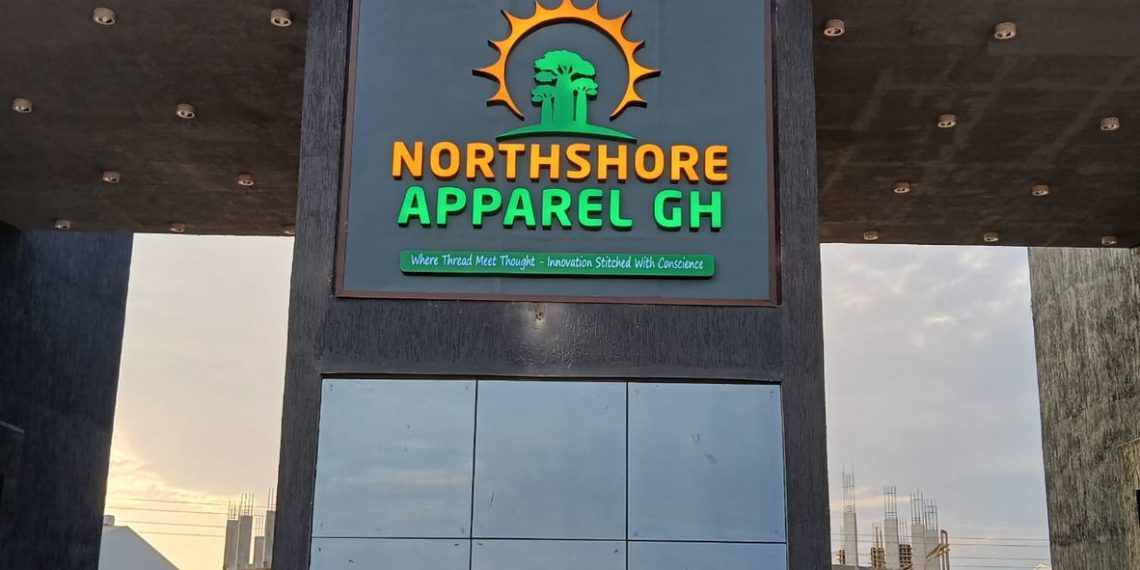
Coats Digital announced on March 12, 2025, that Northshore Apparel Ghana Ltd, a sustainable apparel start-up backed by the Ghanaian and German Governments, has adopted its full suite of solutions—GSDCost, FastReactPlan, and FastReactFabric—as the foundation of its digital infrastructure.
Northshore Apparel is developing Northern Ghana’s first state-of-the-art, zero-waste apparel manufacturing campus on reclaimed land, producing knitted and woven garments including T-shirts, polos, hoodies, children’s wear, sportswear, and more. The facility is part of a regeneration initiative designed to tackle unemployment, reduce internal migration, and create dignified jobs at scale in one of Ghana’s most underserved regions.
Spanning over 50 acres, the facility will employ 2,000 trained staff at launch, with plans to hire an additional 8,000 workers by the end of 2026. Employees will receive fair wages, free meals, on-site medical care, childcare, prayer rooms, and safe facilities, while a dedicated training academy will upskill young people and women. The zero-waste campus will use anaerobic biodigesters, water recycling, and solar generation, ensuring sustainable operations.
By integrating GSDCost, FastReactPlan, and FastReactFabric, Northshore Apparel will implement scientific garment costing, fair labour standards, efficient production planning, and optimised fabric utilisation, eliminating data silos and enabling real-time, proactive decision-making.
Nurideen Mohammed, Co-Founder and CEO, emphasised that the goal is to create a regenerative manufacturing ecosystem delivering opportunity, dignity, and long-term prosperity for Northern Ghana. Kunal Kapur, Managing Director of Coats Digital, highlighted that the partnership demonstrates how digitisation can drive efficiency, ethical work practices, and sustainability in apparel manufacturing.
The project positions Northshore Apparel as a model for globally competitive, ethical, and technologically advanced apparel production in West Africa, supporting shorter, resilient supply chains and meeting the demands of mindful international fashion brands.
Source: citinews
