



|
Getting your Trinity Audio player ready...
|
Saudi Arabia’s transformation into a leading tourism hub in the Gulf represents one of the most ambitious economic diversification efforts in recent history. For decades, the Kingdom’s global identity was largely defined by its oil economy and religious significance. Today, that narrative is shifting rapidly as Saudi Arabia positions itself as a competitive, multi-segment tourism destination under the strategic framework of Vision 2030.
Saudi Arabia’s Tourism Surge: A New Global Contender
Saudi Arabia’s rapid emergence as a global tourism contender reflects a coordinated shift in economic strategy and national positioning. Backed by Vision 2030, the Kingdom is leveraging large-scale capital investment, regulatory reforms, and global marketing to reposition itself beyond its traditional identity. The expansion spans luxury resorts, heritage sites, entertainment hubs, and nature-based destinations, creating a diversified tourism portfolio. Improved visa access and growing air connectivity are lowering entry barriers for international travelers. This combination of policy alignment and infrastructure development is accelerating Saudi Arabia’s transition into a competitive, year-round destination in the global tourism market.
The Big Push: Vision 2030 Targets
Saudi Arabia is turning into one of the fastest-growing tourism hubs in the world right now, and it’s all part of Vision 2030. Here’s what’s happening:
Goal: 150 Million Tourists Annually by 2030
Under Vision 2030, Saudi Arabia aims to attract 150 million visitors each year by 2030. At least one-third are expected to come from international markets, reflecting a deliberate shift toward global tourism integration and reduced reliance on domestic travel and religious pilgrimage alone.
Progress: Rapid Growth in Visitor Numbers
Saudi Arabia has already surpassed earlier benchmarks, recording about 122 million visitors in 2025. This includes both domestic and international travel, showing strong momentum. The steady rise in visitor numbers indicates that policy reforms, infrastructure investment, and global marketing efforts are translating into measurable tourism growth.
Economic Impact: Rising Contribution to GDP
Tourism generated approximately SAR 275 billion in 2025, highlighting its growing economic relevance. The sector is expected to contribute close to 10% of GDP, signaling a structural shift. This expansion supports job creation, increases foreign exchange inflows, and strengthens Saudi Arabia’s long-term strategy to diversify beyond oil revenues.
The Flagship Mega Projects Driving Global Attention
NEOM
NEOM represents Saudi Arabia’s most ambitious tourism and urban development initiative. At its core is The Line, a linear smart city designed to operate without cars, powered entirely by renewable energy. Complementing this is Trojena, a mountain destination that will host the 2029 Asian Winter Games, introducing alpine tourism to the region. Sindalah island adds a luxury maritime dimension, targeting global yachting elites. Collectively, NEOM blends sustainability, technology, and high-end tourism into a future-oriented destination model.
The Red Sea Project
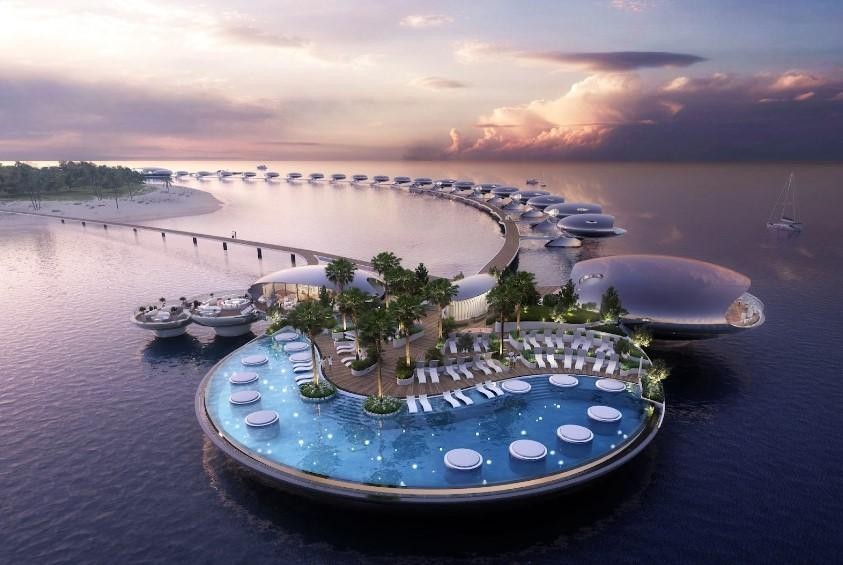
The Red Sea Project is positioned as a global benchmark for luxury and sustainable tourism. Spanning over 28,000 square kilometers, it focuses on pristine islands, coral reefs, and eco-sensitive development. Resorts are designed to operate with minimal environmental impact, targeting high-end travelers seeking exclusivity and wellness experiences. With a growing portfolio of resorts, including more accessible options, the project aims to balance luxury with scalability, positioning Saudi Arabia as a serious competitor in global coastal tourism.
AlUla
AlUla stands at the intersection of heritage and modern tourism development. Recognized as a UNESCO World Heritage site, it offers archaeological assets dating back thousands of years, including Nabatean tombs. The government is investing heavily to transform it into a cultural tourism hub, with infrastructure, hospitality, and digital storytelling integrated into the visitor experience. By 2035, it is expected to support thousands of jobs and hotel rooms, positioning AlUla as a flagship destination for heritage-driven tourism.
Qiddiya
Qiddiya is being developed as Saudi Arabia’s primary entertainment, sports, and cultural hub. Located southwest of Riyadh, it is designed to host theme parks, motorsport facilities, stadiums, and arts venues. The project aims to capture domestic tourism spending that previously flowed abroad while also attracting international visitors. With its planned opening phases starting around late 2025, Qiddiya is expected to become a central pillar in the Kingdom’s effort to build a vibrant, experience-driven tourism economy.
Aseer Region
The Aseer region offers a contrasting tourism experience compared to Saudi Arabia’s desert and coastal landscapes. Known for its cooler climate and mountainous terrain, it is being developed into a nature and wellness destination. Investments by the Public Investment Fund and private stakeholders are targeting eco-lodges, hiking trails, and cultural villages. Although still emerging, Aseer has strong potential to attract both domestic and international tourists seeking outdoor and climate-based tourism experiences.
Khaybar (Cave Tourism)
Saudi Arabia’s cave systems, particularly around Khaybar, are emerging as a niche tourism segment focused on adventure and scientific exploration. These volcanic landscapes feature lava tubes and underground formations that are being studied and gradually opened for controlled tourism. The initiative combines geology, education, and adventure, appealing to a specialized segment of travelers. Over time, cave tourism could complement broader nature-based offerings and position Saudi Arabia as a destination for unique geological experiences.
Moving Beyond Pilgrimage: New reasons to visit
Religious tourism remains the backbone of Saudi Arabia’s visitor economy, centered on pilgrimage to Mecca and Medina. The government continues to expand capacity, improve crowd management, and upgrade infrastructure to accommodate growing pilgrim numbers. While diversification is underway, this segment provides consistent demand, strong revenue inflows, and a stable base for broader tourism development.
Smart Heritage Tourism
Saudi Arabia is modernizing its historical assets by integrating technology into cultural experiences. Sites like AlUla and Diriyah Gate use augmented reality, artificial intelligence, and immersive storytelling to enhance visitor engagement. This approach transforms traditional sightseeing into interactive experiences, appealing to younger, tech-savvy travelers while preserving cultural authenticity and historical significance.
Seasonal Festivals and Events
Large-scale events such as Riyadh Season and Jeddah Season are designed to distribute tourism demand throughout the year. These festivals combine entertainment, retail, culture, and sports, attracting both domestic and international audiences. By reducing reliance on peak religious periods, Saudi Arabia is creating a more balanced tourism calendar and increasing overall visitor spending.
Adventure and Nature Tourism
Saudi Arabia is leveraging its diverse landscapes to develop adventure tourism. The Red Sea offers world-class diving, while regions like Aseer provide hiking and mountain experiences. Desert tourism, cave exploration, and eco-tourism are also expanding. This segment targets travelers seeking unique, outdoor experiences, helping diversify the tourism portfolio beyond urban and religious attractions.
Targeting Asian Markets
Saudi Arabia is actively focusing on high-growth Asian markets, including China, Indonesia, Malaysia, and Japan. Efforts include expanding flight connectivity, simplifying visa processes, and partnering with travel agencies. These markets represent a large and growing share of global tourism demand, making them critical to achieving long-term visitor targets and sustaining international growth.
Expanding into the African Tourism Market
Saudi Arabia is increasingly targeting African travelers, recognizing strong cultural, religious, and economic ties with the continent. Countries such as Ghana, Nigeria, and Kenya present growing outbound tourism potential. Improved air connectivity, tailored travel packages, and visa facilitation are being prioritized. This market is strategic not only for religious travel but also for business, leisure, and diaspora-linked tourism flows.
Improved Accessibility and Connectivity
Saudi Arabia’s tourism growth is strongly supported by deliberate improvements in access and mobility. The introduction of the e-visa system has simplified entry for travelers from over 60 countries, significantly reducing administrative barriers. Plans for a unified GCC tourist visa will further enhance regional movement, allowing multi-country itineraries.
On the aviation side, investments in airlines, including fleet expansion initiatives, are increasing seat capacity and global route coverage. Major airports in Riyadh, Jeddah, and other cities are undergoing expansion to handle rising passenger volumes. Together, these measures are improving connectivity, reducing travel friction, and making Saudi Arabia more competitive as an international destination.
Saudi Arabia’s Tourism Surge and Its Impact on Ghana-Saudi Tourism Relations
Improved Connectivity and Travel Flows
Saudi Arabia’s tourism expansion is driving better air connectivity between Ghana and Saudi Arabia, making travel faster and more accessible. Increased flight routes and aviation investments reduce travel time and costs, encouraging more movement for tourism, business, and religious purposes. Ghanaian travelers can now combine pilgrimage with leisure or business trips. This improved mobility strengthens bilateral engagement, boosts travel demand, and integrates Ghana more closely into global tourism networks linked to Saudi Arabia.
Religious Tourism Expansion and Investment Opportunities
Saudi Arabia’s tourism transformation is expanding the traditional pilgrimage link with Ghana into a broader economic and travel opportunity. Improved infrastructure and services under Vision 2030 enhance the experience for Ghanaian pilgrims while enabling travel agencies to offer combined religious and leisure packages. At the same time, the sector’s growth creates opportunities for Ghanaian businesses and investors to engage in hospitality and services, while attracting Saudi investment into Ghana’s tourism industry.
How does it strengthen Africa-Gulf Relations?
Soft Power and Cultural Diplomacy
Saudi Arabia is leveraging tourism to enhance its global image and cultural influence, engaging African artists, performers, and audiences through major events and festivals. These interactions promote cultural exchange and mutual understanding, strengthening non-political ties. For Africa, this creates platforms to showcase its creative industries and expand cultural exports. Tourism-driven cultural diplomacy builds goodwill and long-term relationships, making Africa–Gulf engagement more resilient by extending beyond economic transactions into shared cultural experiences.
Strategic Positioning: Africa in Gulf Geoeconomics
Saudi Arabia’s tourism push forms part of a broader Gulf strategy to deepen economic ties with Africa. The continent is increasingly seen as a key growth market for tourism and investment. By expanding its tourism ecosystem, Saudi Arabia strengthens its influence over regional travel corridors and economic partnerships. This positions it as a major player in Africa–Gulf relations, shaping investment flows and cooperation frameworks while competing with other Gulf states for strategic influence across African markets.
Trade, Labor Mobility, and Skills Transfer
Saudi Arabia’s tourism expansion strengthens Africa-Gulf relations by combining trade opportunities with labor mobility. Growing demand for goods and services creates export pathways for African businesses, especially in halal food, textiles, and cultural products. At the same time, the sector generates employment for African workers in hospitality and construction. This dual flow supports income generation and skills development, with potential knowledge transfer back to Africa. However, outcomes depend on fair labor policies and effective integration into tourism value chains.
The Bigger Picture
Saudi Arabia’s tourism expansion signals a shift from regional ambition to global positioning. As Saudi Arabia scales investment, infrastructure, and policy reforms under Vision 2030, it is building a diversified, competitive tourism economy. The long-term aim is to rank among the world’s top destinations by 2040. This transformation combines capital strength, cultural assets, and strategic planning, creating a model that influences global tourism dynamics while redefining economic resilience beyond oil.