



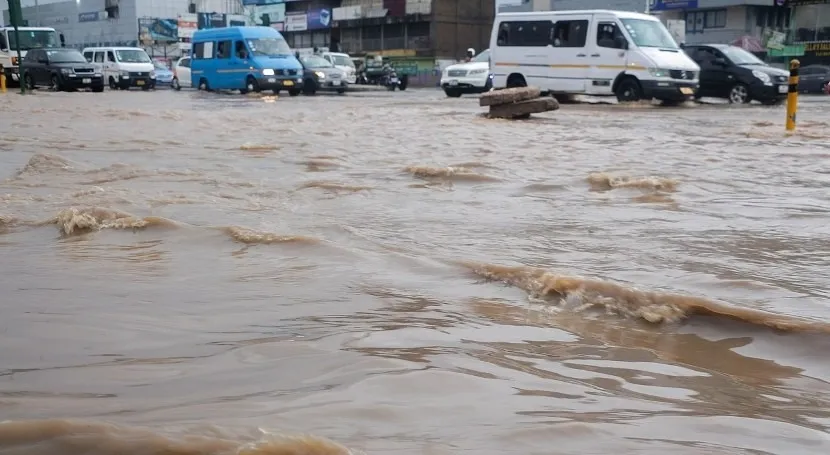
Research has found that more than 70% of Accra Metropolitan Area is highly vulnerable to flooding, with researchers warning that the city’s natural landscape, rather than just human activity, plays a critical role in its persistent flood problems.
The research, published in Environmental and Sustainability Indicators, used advanced geospatial analysis to map flood vulnerability across Accra, Ghana’s capital. The assessment considered geophysical factors like rainfall, soil type, slope, elevation, land cover, and flow accumulation, revealing that these natural elements, even in the absence of human interference, make much of the city prone to flooding.
Despite government investments, such as a GH¢197 million ($38 million) allocation in 2019 for flood control, the study criticizes current efforts as largely reactive and insufficiently targeted at the city’s geophysical vulnerabilities.
The authors recommend a shift toward comprehensive flood risk management, including:
1. Better physical planning and strict development controls
2. Upgrading and maintaining drainage networks
3. Limiting unplanned city expansion
4. Improved waste management
Read the research here: https://www.sciencedirect.com/science/article/pii/S2665972723000636
