



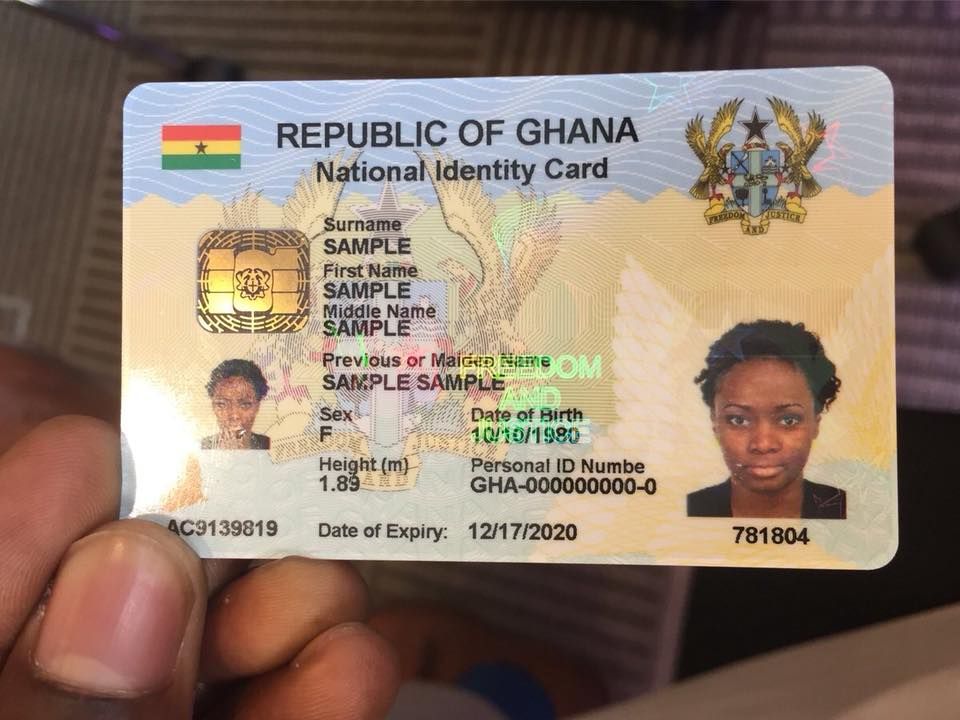
Photocopying or relying on the visual inspection of a Ghana Card for identity verification during transactions has officially become an offence following the enforcement of amendments to the National Identity Register Regulations (L.I. 2111).
Under the revised regulations, biometric verification is now the mandatory method for confirming a person’s identity, replacing the long-standing practice of using photocopies or physically inspecting the Ghana Card.
The amended Legislative Instrument, which was laid before Parliament three months ago and officially gazetted on Wednesday, July 15, introduces penalties for individuals and institutions that fail to comply with the new requirements.
Organisations that breach the regulations face fines ranging from 500 to 2,000 penalty units upon summary conviction, while individuals found guilty may be fined between 50 and 500 penalty units.
The Minister responsible for the National Identification Authority (NIA) is expected to provide further details on the implementation and enforcement of the amended law in the coming days.
The NIA has also advised organisations seeking to use its Identity Verification Platform to begin the onboarding process through the Authority’s designated verification channels.
L.I. 2111, which governs the use of the Ghana Card, makes the national identification card the mandatory document for a wide range of public and private transactions, including voter registration, opening and operating bank accounts, SIM card registration, and accessing government services.
With the latest amendments, the law reinforces the Ghana Card as the country’s sole official national identity document and requires all identity verification for transactions to be carried out through biometric authentication rather than photocopying or visual inspection.
Source: 3news
