



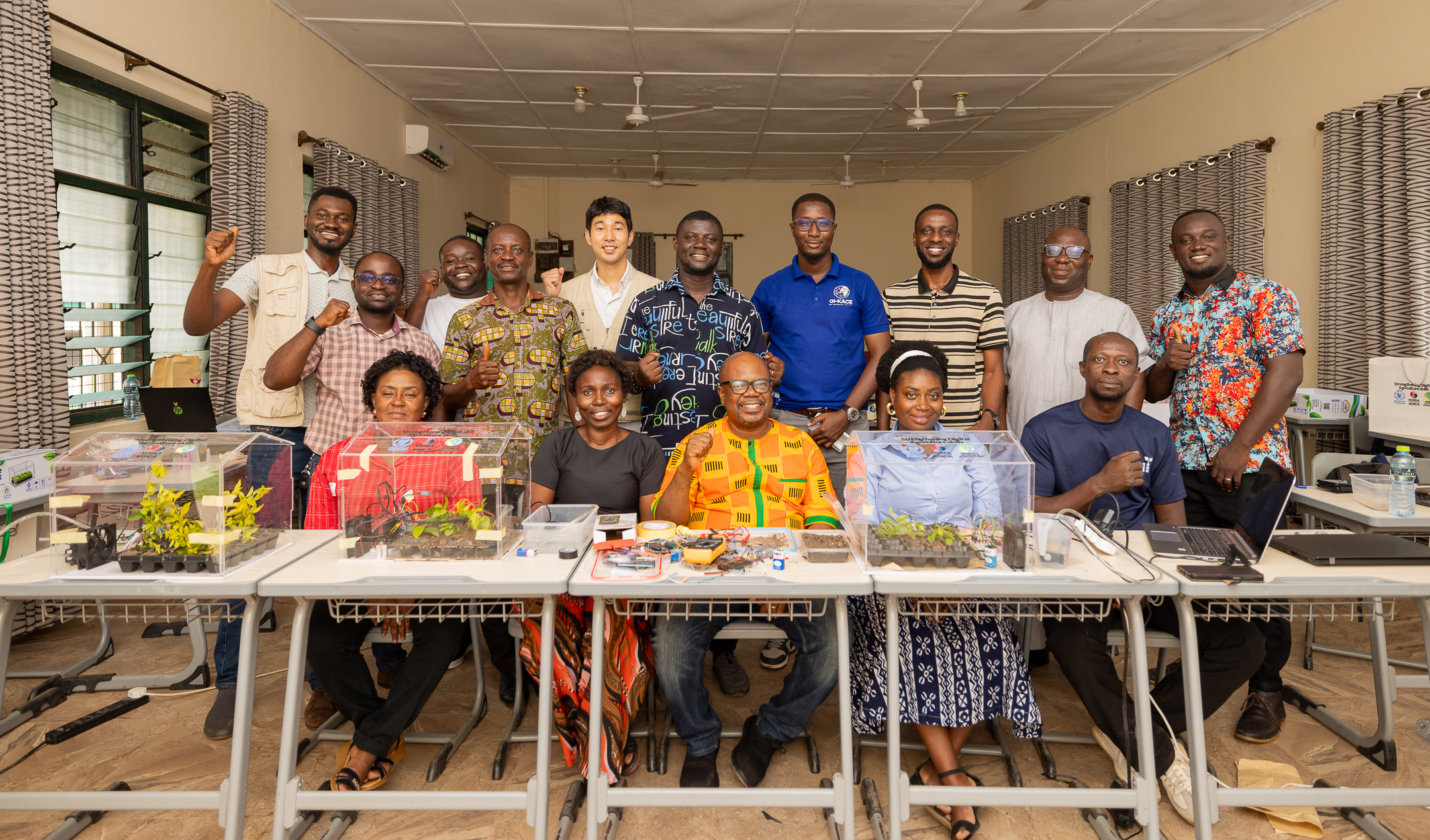
Lecturers and instructors from five (5) agricultural colleges across Ghana have returned to the classroom, this time as students, as part of a major effort to equip the next generation of agricultural professionals with digital skills for modern farming.
The Training of Trainers on the Digital Agriculture Skills Training Programme, which began on 12 October, is preparing lecturers from Kwadaso, Wenchi, Ejura, Damongo and Ohawu Agricultural Colleges to teach new digital agriculture courses that will soon be integrated into their institutions’ curricula.
Running until 14 November, the programme comprises two intensive five-day training packages for each college across the five campuses. The training on the digital agriculture curriculum and devices is being delivered by the Ghana-India Kofi Annan Centre of Excellence in ICT (GI-KACE), while DroneHub is leading the specialized drone training component.
The initiative forms part of broader efforts to modernize agricultural education in Ghana and ensure graduates are equipped with the technological skills increasingly required in the agriculture sector.
For Kyoreh, WFP Programme Policy Officer; providing technology to the colleges is only part of the equation.
“This training is critical, because having access to modern technology alone is not enough. Instructors and tutors must have the knowledge, skills and confidence to use these technologies effectively before they can pass those competencies on to their students.”
The training covers precision farming, soil and moisture monitoring, agricultural data analysis, drone operations and the use of Internet of Things (IoT) technologies for irrigation and farm management.
For participating instructors, the programme is helping bridge the gap between classroom theory and practical application.
“Students get the concept, but it is difficult for them to grasp because they have not actually applied the skills. Through this training, we have seen how we can help them relate classroom work to real-life experience,” said Eva Nii Okai, one of the participating instructors from Kwadaso Agriculture College.
Ahead of the planned introduction of the new curriculum, lecturers are being trained to ensure they can effectively transfer these new skills to students.
The training follows the handover of more than USD 500,000 worth of digital agriculture equipment to the five colleges through the Ministry of Food and Agriculture (MoFA) on 30 September, provided by WFP with the support of the Republic of Korea through KOICA to strengthen digital agriculture training and learning capacity. The equipment includes drones, flight simulators, soil testers, moisture meters, IoT kits, weather stations, GPS devices, computers and data-processing software.
GI-KACE led the development of the digital agriculture training programme in consultation with Commission for Technical and Vocational Education and Training (CTVET), MoFA, agricultural colleges and WFP. The programme will be delivered by the participating colleges as part of efforts to strengthen Agric students’ digital agriculture competencies.. Instructors will also receive practical drone training from the University of Mines and Technology to support their certification by the Ghana Civil Aviation Authority.
Ultimately, the programme aims to equip students not only to use emerging agricultural technologies, but also to promote their adoption across Ghana’s agriculture sector.
“We want to make sure that the students we are targeting through this programme acquire hands-on technical skills to use the new technologies in agriculture, so that when they graduate and go out of the colleges, they will become champions of these new technologies and promote their use in agriculture in Ghana,” Kyoreh said.
The Strengthening Digital Agriculture Skills Initiative is implemented by WFP in partnership with MoFA, GI-KACE, CTVET and the five participating agricultural colleges, with funding from the Government of the Republic of Korea through the Korea International Cooperation Agency (KOICA).
