




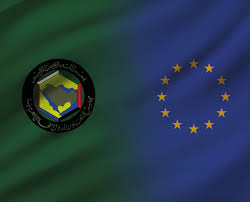
The global economic map is shifting, not through sudden disruption, but through gradual rebalancing. For decades, Europe represented the benchmark of economic integration, institutional strength, and market depth. Today, however, a different narrative is gaining traction. The Gulf region long defined by hydrocarbons is rapidly transforming into one of the world’s most dynamic strategic economic zones.
This transformation is not rhetorical. It is grounded in measurable shifts in growth patterns, capital flows, infrastructure development, and geopolitical positioning. While the Gulf is not yet Europe in scale or institutional depth, it is increasingly positioning itself as a parallel center of economic gravity one that is agile, capital-rich, and globally connected.
A Tale of Two Growth Trajectories
At the core of this comparison lies growth performance. Recent projections from the International Monetary Fund show a clear divergence in economic momentum. The euro area is projected to grow at approximately 1.1% in 2026, reflecting persistent structural challenges, including high energy costs, aging demographics, and slow productivity gains. In contrast, key Gulf economies such as Saudi Arabia and the UAE are projected to grow around 3.1%, with a rebound toward 4-5% expected in subsequent years driven by non-oil sector expansion.
This gap is not trivial. It signals a shift in economic dynamism. Europe remains large, but its growth is incremental. The Gulf, by contrast, is accelerating. The global context reinforces this. The IMF projects global growth at 3.1% in 2026, placing Gulf economies closer to or above the global average, while Europe lags behind.
Strategic Agility: Speed as a Competitive Advantage
One of the most defining features of the Gulf’s rise is strategic agility. Unlike Europe’s complex regulatory environment and multi-layered governance structures, Gulf economies operate with centralized, execution-driven policy frameworks. This has translated into rapid implementation of economic reforms:
Saudi Arabia’s Vision 2030 diversification agenda
Saudi Arabia is deliberately moving beyond oil by investing heavily in tourism, entertainment, renewable energy, and industrial development. Projects like NEOM and the Red Sea initiative are not just symbolic; they reflect a broader shift toward job creation, private sector growth, and attracting global investors into a more diversified and future-ready economy.
The UAE’s aggressive positioning in global trade, finance, and technology
The UAE has positioned itself as a gateway for global business by creating a highly attractive environment for investors and multinational firms. Through free zones, business-friendly regulations, and strong digital infrastructure, it continues to attract finance, fintech, and tech companies, making cities like Dubai and Abu Dhabi central nodes in global commerce.
Qatar’s infrastructure expansion linked to global events and logistics
Qatar has used global platforms like the FIFA World Cup to accelerate infrastructure development, including transport systems, ports, and urban expansion. Beyond the event itself, these investments are strengthening its long-term position as a logistics and aviation hub, improving connectivity and supporting broader economic diversification efforts.
These are not long deliberative processes; they are coordinated national strategies executed with speed. In contrast, Europe’s institutional strength is also its constraint. Policy harmonization across 27 member states often slows decision-making. Even the IMF has noted that structural reforms such as improving energy integration and capital markets remain incomplete and politically complex. In practical terms, the Gulf moves faster. Europe moves deeper, but slower.
Capital Power: The Gulf’s Financial Muscle
The Gulf’s economic ascent is underpinned by one critical factor: capital. Sovereign wealth funds across the Gulf particularly in Saudi Arabia, the UAE, and Qatar control trillions of dollars in global assets. These funds are not passive reserves; they are active instruments of economic strategy, deployed across infrastructure, technology, energy transition, and global finance. This gives the Gulf three distinct advantages:
The ability to invest counter-cyclically during global downturns
When the global economy slows down, most countries tighten spending, delay projects, and become risk-averse. The Gulf often does the opposite. With strong financial reserves, it continues investing even when others pull back. This allows Gulf economies to acquire global assets at lower valuations and sustain domestic development. In simple terms, while others are retreating, the Gulf is positioning itself for the next cycle of growth, which strengthens its long-term competitiveness.
The capacity to finance large-scale domestic transformation projects
The Gulf does not just plan big projects; it has the financial strength to execute them. From smart cities like NEOM in Saudi Arabia to world-class airports, ports, and tourism infrastructure, these projects are backed by substantial state funding. This reduces reliance on external borrowing and speeds up delivery timelines. For citizens and investors, this creates visible confidence that plans will actually materialize, not remain on paper, which is often a challenge in many other regions.
Strategic influence in global capital markets
Gulf sovereign wealth funds are not passive investors; they are strategic players shaping global markets. By investing in major companies, infrastructure, technology, and even sports industries worldwide, they build long-term influence and partnerships. These investments are carefully aligned with national economic goals, such as technology transfer or diversification. Over time, this creates a network of global economic relationships that enhances the Gulf’s bargaining power and visibility on the international stage.
Europe, despite its economic size, faces tighter fiscal constraints. Public debt levels, fiscal rules, and fragmented capital markets limit the speed and scale of investment deployment. The difference is structural: Europe depends heavily on private and institutional capital flows. The Gulf can mobilize state-backed capital at scale and with strategic intent.
Sectoral Outperformance: Where the Gulf Is Pulling Ahead
The Gulf is not outperforming Europe across all sectors. But in several key areas, it is gaining a clear edge.
Aviation and Logistics
The Gulf has turned geography into a serious competitive edge. Sitting between Asia, Africa, and Europe, it has built aviation and logistics systems that feel almost seamless. Airlines like Emirates and Qatar Airways are not just carriers; they are global connectors, moving people and goods efficiently across continents. At the same time, ports in places like Dubai and Saudi Arabia are expanding rapidly. Compared to parts of Europe where congestion and aging infrastructure slow things down, the Gulf offers speed, reliability, and scale that global businesses increasingly depend on.
Energy and Energy Transition
Energy remains the Gulf’s strongest card, but what is changing is how it is being played. Countries like Saudi Arabia and the United Arab Emirates are not only major oil and gas producers; they are investing heavily in renewables, hydrogen, and clean energy technologies. This creates a rare advantage. While Europe pushes aggressively toward green energy, it still depends on imports. The Gulf, on the other hand, is both a supplier and a future clean energy investor. That dual role gives it more control, more flexibility, and stronger long-term positioning.
Tourism and High-End Services
Tourism in the Gulf has evolved from a niche offering into a global attraction. Cities like Dubai and Doha have built destinations that combine luxury, efficiency, and experience in a way that feels intentional. From world-class airports to integrated resorts and business hubs, everything is designed to attract global visitors. Europe still has cultural depth and history, but development there is often slower due to regulations and legacy systems. The Gulf’s ability to build quickly and think big has allowed it to capture high-value tourism and business travel segments.
Geography as Destiny: The Gulf’s Strategic Position
Geography has always mattered in economic history. Europe’s rise was partly built on its position in global trade networks. Today, the Gulf is leveraging its own geographic advantage. Situated at the intersection of Asia, Africa, and Europe, the Gulf serves as a natural corridor for:
Energy flows
The Gulf sits at the heart of global energy routes, supplying oil and gas to Asia, Europe, and beyond. Its ports and shipping lanes make it a critical artery, ensuring that energy moves efficiently to the world’s largest consuming economies.
Trade routes
The region connects major global markets through strategic maritime and air corridors. Goods moving between Asia, Africa, and Europe often pass through Gulf ports, making it a natural midpoint that reduces transit time and improves efficiency for global supply chains.
Financial linkages
The Gulf is increasingly acting as a bridge for capital between East and West. Investors, sovereign funds, and financial institutions use the region as a base to channel investments into Africa, Asia, and Europe, creating a growing web of financial connectivity.
Aviation networks
Air travel through the Gulf has become one of the most efficient ways to connect continents. Major airlines operate from the region, linking cities across the world with minimal layovers, turning the Gulf into a central hub for global passenger and cargo movement.
This positioning is increasingly important in a multipolar world where economic activity is shifting toward Asia and emerging markets. Europe remains a major destination market. The Gulf is becoming a connector.
Why the “New Europe” Narrative Is Emerging
The idea of the Gulf as the “New Europe” is not about replication. It is about perception and trajectory. Three factors drive this narrative:
Visible transformation
What stands out immediately in the Gulf is how quickly things change. Entire districts, airports, financial centers, and tourism hubs emerge within a few years, not decades. For investors and observers, this creates a strong sense of momentum. It feels like a region that is not waiting, but actively building its future in real time.
Investor confidence
Investors are drawn to environments where decisions are clear and execution is fast. In the Gulf, policies are often straightforward, incentives are attractive, and projects move quickly from planning to reality. This reduces uncertainty. For many global investors, the region feels predictable, well-funded, and aligned with long-term economic transformation goals.
Comparative stagnation in parts of Europe
In parts of Europe, growth feels slower and more constrained. High energy costs, regulatory complexity, and political coordination challenges can delay progress. This does not mean Europe is weak, but it does affect perception. When compared side by side, the Gulf appears more energetic, while Europe sometimes feels like it is managing stability rather than pursuing rapid expansion. It retains deeper industrial capacity, stronger institutional frameworks, and a larger consumer base.
Over the next Decades
The Gulf is not replacing Europe. It is redefining its own role in the global economy. Over the next decade, the Gulf is likely to:
Outperform many European economies in growth rates
The numbers are already telling a clear story. The World Bank projects GCC growth at around 4.4-4.5% in 2026, compared to roughly 1-1.5% in advanced European economies. In simple terms, while Europe is inching forward, the Gulf is moving with momentum driven by reforms, investment, and expanding non-oil sectors.
Expand its influence in global capital markets
The Gulf’s financial strength is becoming hard to ignore. Sovereign wealth funds in the region control trillions in assets and are actively investing across global markets. Strong domestic demand, low inflation (around 2%), and rising credit growth are reinforcing this influence, positioning the Gulf as a serious global capital allocator.
Deepen its diversification into non-oil sectorsPerhaps the most important shift is happening quietly. Non-oil sectors now account for over 70% of GDP in parts of the GCC, showing real progress beyond hydrocarbons. Tourism, technology, finance, and services are expanding steadily, making the Gulf economy more balanced, resilient, and less dependent on oil than it was a decade ago.
