



|
Getting your Trinity Audio player ready...
|
In today’s global economy, the quest for fairness in value chains for small-scale producers in agricultural value chains is increasingly linked to the politics of pricing and the power dynamics that govern global trade. Despite their hard work, small-scale farmers are the least rewarded in global agriculture-food value chains that rely heavily on their efforts. From cocoa and cotton to tea and palm oil, their labour drives industries valued in billions.
These farmers work from dawn to dusk growing crops that support their families, national economies and the multinational trade investment returns, yet they are the least rewarded. The challenge is not just about production; it is about ensuring that our food production and farmers are able to receive fair value for their goods in an increasingly competitive marketplace.
Achieving fair value for African small-scale farmers is essential for sustainable development, and fair pricing ensures that farmers can invest in their farms and achieve better incomes. When farmers earn a fair income from their productive resources, labour, land and the rules governing trade, they are more likely to invest in sustainable practices and environmental management that contribute to better food security and wellbeing.
A recent assessment of the cotton sector by TrustAfrica in Zambia and Mozambique reveals a familiar but alarming trend. Farmers often lack understanding of how prices are set or what deductions come from their earnings. Many only learn about the true cost of inputs or the selling price at harvest time. This leaves them no opportunity to make informed decisions or negotiate better terms. It creates a structural challenge that reinforces the power imbalance between farmers and larger players in the ecosystem who control credit, markets, and pricing information.
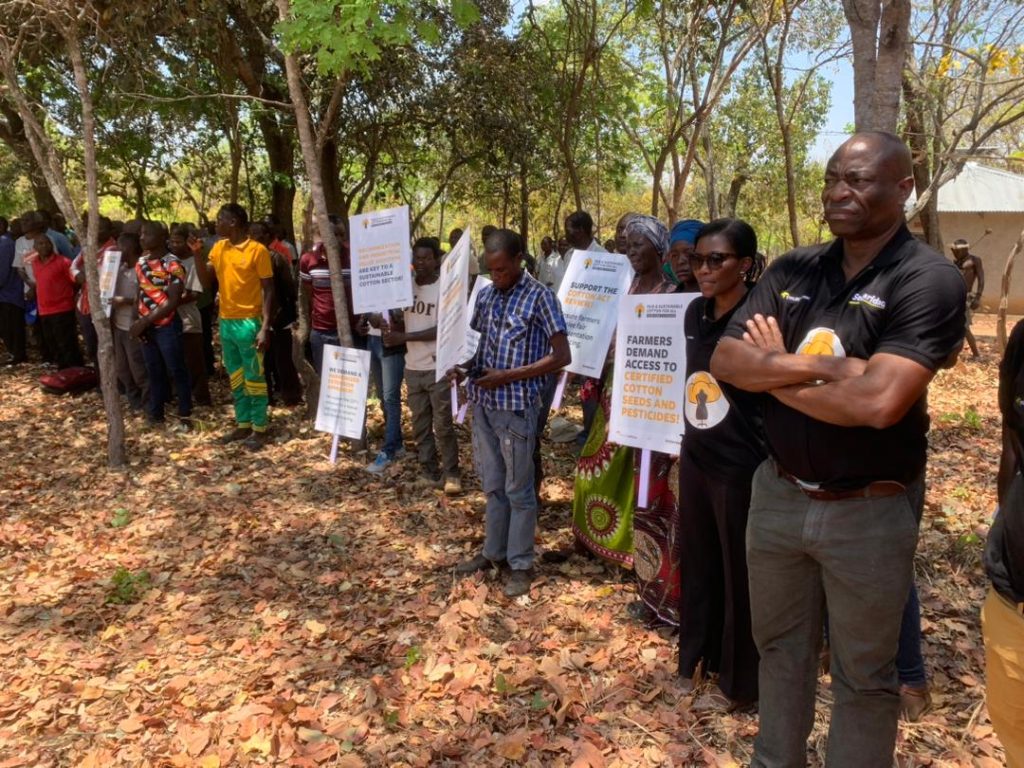
Behind the ‘white gold’ feeding the worldwide textile industry lies a troubling reality: those who cultivate it receive the smallest rewards.
Beyond economic concerns lies a deeper issue—the growing gender gap affecting both efficiency and fair pay for women who are engaged as workers or entrepreneurs in global value chains. In most farming communities, women constitute more than half of the workforce. Yet they are often excluded from discussions where value is negotiated, prices determined, and income distributed. The African Development Bank estimates that the rural wage gap between men and women in Africa ranges from 15% to as much as 60%. This gap persists because women are rarely included in decisions about income and the use of capital.
At the heart of these disparities is their limited access to and ownership of productive resources such as land and assets. In many regions, women mainly work on family-owned land where they lack legal control and often receive little or no pay for their efforts. Even when women own land, their rights are frequently poorly documented, socially disputed, or often taken from them. The broader consequence is that it diminishes their ability to use land as collateral or leverage in investment negotiations.
It also makes it more difficult for women farmers to access loans or enter formal contracts with buyers to increase their yields. This exclusion not only reduces women’s income and contributions but also weakens the agricultural sector by ignoring those who do most of the work.
In summary, this issue with unfair value distribution extends beyond prices to control over land, information, and terms of participation in the agricultural economy. Until farmers, especially women, secure land rights, have transparent pricing, and participate in decision-making, fair value distribution will remain elusive. Fair value distribution acknowledges that equity is impossible without gender justice. When women lack secure land rights and representation, productivity declines and food security worsens.
TrustAfrica is working to transform this narrative through fair value distribution initiatives in the Reclaim Sustainability! (RS) Programme. Implemented by TrustAfrica and partners and supported by the Dutch Ministry of Foreign Affairs, demonstrating how the fair distribution of value can move from concept to practice in agri-food value chains and trade.
Moreover, what sets the fair value distribution initiatives in the RS! Programme apart is its participatory approach and broader stakeholder engagement, which has become apparent in the communities where the project operates. For example, in Zambia, cotton farmers have seen the value of mobilising and organising into stronger associations capable of negotiating better terms.
In Mozambique, the project has facilitated dialogues between government agencies and farmers to improve access to high-quality seeds and extension services.
In Kenya and Uganda’s tea sectors, the project has ensured the participation of small-scale tea growers, especially women tea farmers, a voice in multi-stakeholder dialogue on national tea policies, as well as venturing into new business models such as specialty teas with better pricing structures. This power of collective action has mobilised these farmers into cooperatives and now a formidable Women in Tea Association. This has greatly amplified their voice in negotiations with buyers and policy-makers and built their capacity to add value to their teas and market quality teas.
In Ghana’s oil palm value chain, the programme has seen the successful revision in pursuit of fairness of the Oil Palm Development Association of Ghana (OPDAG) constitution to include a provision that ensures at least 30% of leadership positions are reserved for women. This structural adjustment and major policy shift ensure women have considerable representation in important industry decisions, which was not the case before.
Related to the above is Sierra Leone, where awareness of women’s land rights has increased, leading to more participation in land governance. Campaigns through radio discussions, community sensitization and multi-stakeholder dialogues have led to greater appreciation of the Customary Land Rights Act, the National Land Commission Act, and the Gender Empowerment and Equality Act. Today, women and women champions are increasingly participating in land-related discussions, and litigating land disputes in the court and the traditional palace system
In Côte d’Ivoire, the focus has shifted to making land registration procedures easier, which have often excluded poor households and women. Through storytelling, community discussions, and partnerships with Agence Foncière Rurale (AFOR) and surveyors’ associations, women are being assisted to formalize their land rights.
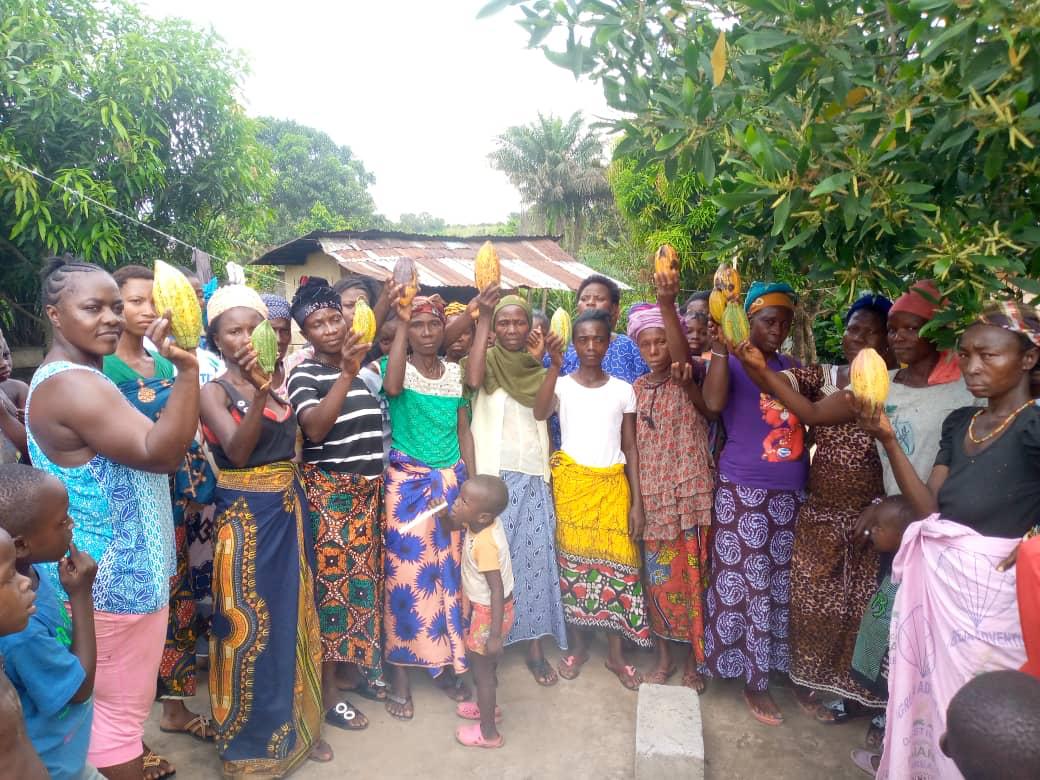
A powerful example is Mr Ouédraogo Adama, a cocoa farmer from Sassandra, in the Bas-Sassandra Region of Côte d’Ivoire. Unlike many in the community, he made a groundbreaking decision to divide his cocoa plantation into three parts and allocate three hectares each to his two wives, as well as assist them in formalizing the process. He attributed his decision to a TrustAfrica radio program he listened to during a visit to Divo.
This case reaffirmed the role of Reclaim Sustainability! Programme, highlighting the power of awareness and advocacy in challenging traditional norms and advancing gender equity in land ownership.
Fair value distribution is a practical pathway to equity in the value chains, where farmers understand prices, own land, participate in transparent negotiations and organise collectively to retain value where it is created.
From the smallest plot in Sassandra, to the vast fields in Ghana’s Northern region, to global markets, there must be a seat at the table and a voice for every farmer in shaping the life they live and the future they seek. This could be the surest way to truly transform Africa’s agricultural future.
By Bethule Nyamambi, Manager, Equitable Development, TrustAfrica
