



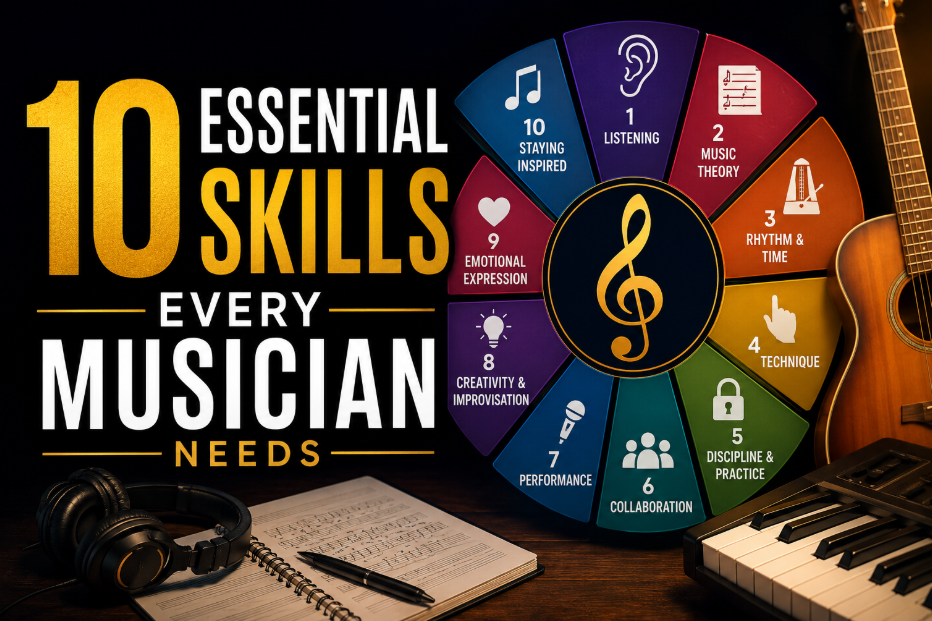
Technical proficiency is the foundation. This means clean tone, accurate intonation, dynamic control, and the physical stamina to play or sing for extended periods without fatigue.
Great musicians hear nuances others miss: intervals, chord changes, rhythms, and timbre. This skill enables you to learn songs by ear, improvise, and collaborate effectively.
How to improve: Use apps for interval and chord recognition, transcribe solos, and practice singing back melodies. Actively analyze songs you love.
Understanding scales, chords, harmony, progressions, and form gives you the “language” of music. It accelerates learning, improves composition, and helps you communicate with other musicians.
How to improve:Start with basics (keys, triads, common progressions) and apply them immediately to your instrument. Tools like functional harmony exercises are excellent.
4. Rhythm, Timing, and Groove
Tight timing and a solid sense of groove are non-negotiable, especially in ensemble or recording settings. You must lock in with a click track or other players.
How to improve: Practice with a metronome (start slow), drum machines, or backing tracks. Work on subdivisions and feel for different genres (swing, straight, shuffle).
Being able to read sheet music or charts efficiently opens doors to gigs, auditions, and studio work. Even if you play by ear primarily, this skill makes you more versatile.
How to improve: Read new music daily, even simple pieces. Use method books or apps that generate random exercises.
Music thrives on originality whether composing, soloing, or arranging. Creativity turns technical skill into art.
How to improve: Set aside “free play” time, experiment with constraints (e.g., only use three notes), jam with others, and study masters in your genre while pushing boundaries.
Delivering a compelling live show involves more than playing notes: it’s confidence, audience engagement, and handling pressure.
How to improve: Perform as often as possible, open mics, small gigs, or even streaming. Film yourself and refine your energy and interaction.
Music is rarely solitary. You need to listen to others, compromise, lead when necessary, and build strong relationships with bandmates, producers, and audiences.
How to improve: Join ensembles, attend workshops, and practice clear, respectful feedback. Develop empathy and reliability.
To sustain a career, musicians must handle marketing, networking, finances, social media, and self-promotion. Many successful artists treat music like a business.
How to improve: Learn basic graphic design for promo materials, understand streaming platforms and royalties, build an online presence, and network at events.
The music world involves rejection, changing trends, technology shifts, and financial ups and downs. Resilience keeps you going, while adaptability helps you evolve.
How to improve:Set long-term goals with short-term milestones. Embrace new tools (DAWs, AI aids, etc.), seek mentors, and view setbacks as data.
source: kaknews.com
