



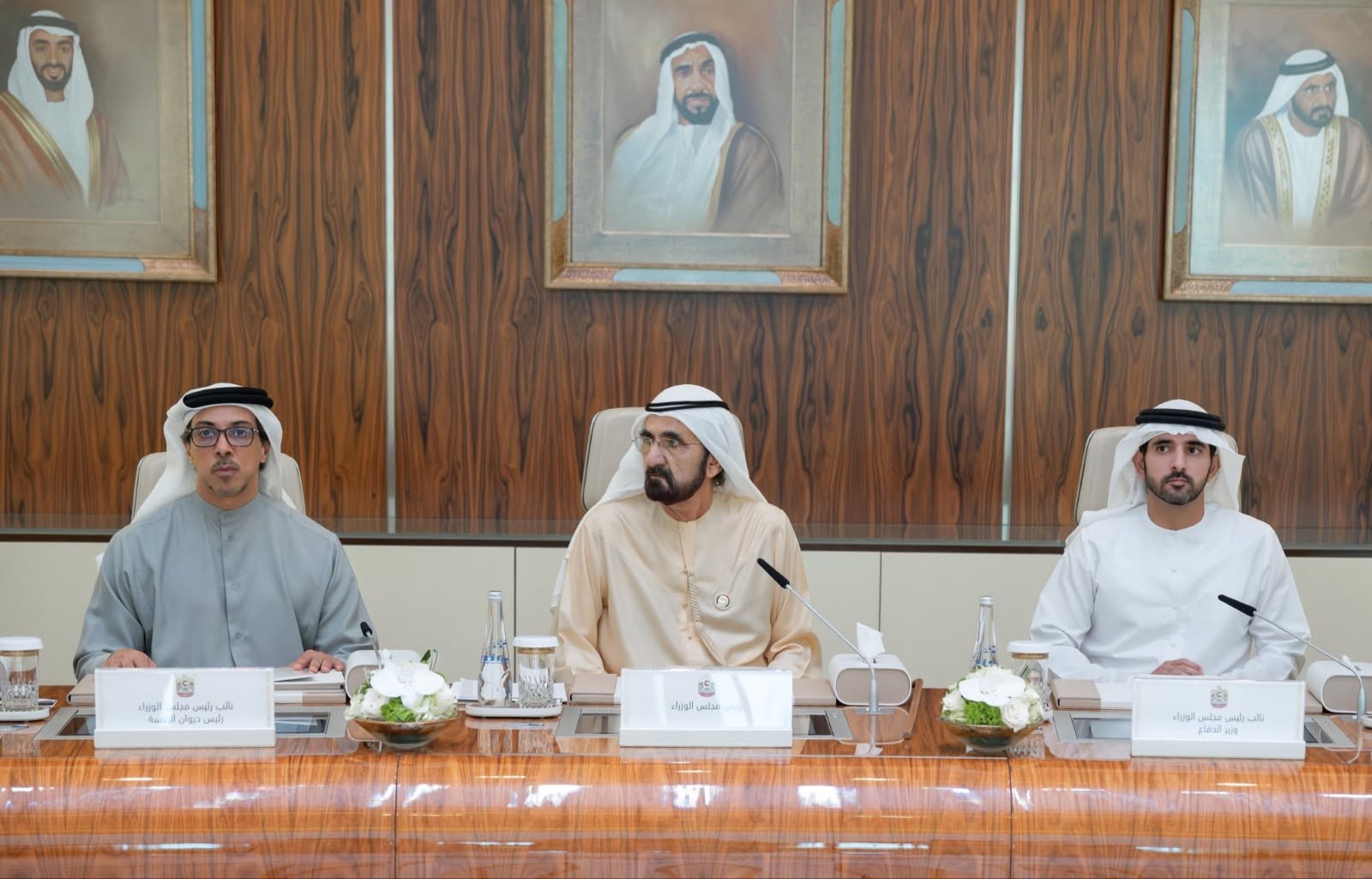
On 2 September 2026, the United Arab Emirates Cabinet convened at Qasr Al Watan in Abu Dhabi under the chairmanship of His Highness Sheikh Mohammed bin Rashid Al Maktoum, Vice President and Prime Minister of the UAE and Ruler of Dubai. The meeting marked the beginning of the UAE’s new government season and produced a series of decisions that extend well beyond the country’s domestic policy agenda.
At the center of the meeting was an unmistakable message: the UAE intends to make artificial intelligence, human capital, digital government and environmental sustainability central instruments of national development.
The significance of the meeting for Africa is particularly important. The Cabinet did not merely approve an artificial intelligence curriculum for UAE schools. It also approved a mechanism to make the curriculum and its components available to education ministries and the international education community. At the same time, the UAE approved a National Ecotourism Policy, a National Framework for Financial Sustainability Standards, launched an AI-powered Cabinet decision-support system, and reviewed progress under its National Strategy to Combat Desertification 2022-2030.
For Ghana and other African countries, therefore, the meeting should not be viewed simply as another UAE domestic policy announcement. It should be understood as a potential template for a new generation of UAE-Africa cooperation based on technology transfer, skills development, digital transformation, investment and climate resilience.
The question is no longer simply what the UAE is doing with AI. The more important question for Africa is: how can African countries position themselves to benefit from what the UAE is building?
What exactly happened at the UAE Cabinet meeting?
The 2nd September meeting produced several interconnected decisions.
Cabinet AI Advisor: Bringing Artificial Intelligence into Government Decision-Making
The UAE Cabinet approved the launch and rollout of the Cabinet AI Advisor, an agentic artificial intelligence system designed to strengthen the quality, speed and evidence base of government decision-making. The system uses 32 specialised AI advisors to analyze policies, legislation, strategies, programs and initiatives presented to the Cabinet. These AI advisors assess potential financial, economic, social and environmental impacts, compare proposals against global best practices and UAE national priorities, and generate recommendations from approved information sources. The system will also support ministers around the clock in monitoring decisions and implementation. Importantly, the UAE says the system operates within confidentiality and cybersecurity requirements, demonstrating an attempt to combine advanced AI with institutional governance.
AI Curriculum: Preparing the Next Generation for an Artificial Intelligence Economy
The Cabinet approved the implementation of an artificial intelligence curriculum across all public and private schools in the UAE, following a pilot program in public schools that was evaluated positively. The curriculum is designed to equip students with knowledge of AI data, algorithms, applications, technical foundations, risks and ethical considerations. Rather than treating AI simply as a technology subject, the program seeks to develop the skills required to understand and use AI responsibly across different areas of life and work. The Cabinet also approved a mechanism for making the curriculum and its components available to education ministries internationally. This creates an important avenue for knowledge exchange with countries such as Ghana and other African states seeking to strengthen AI literacy and digital skills.
Developing Teachers and Educators: The Human Capital Behind AI Education
Recognizing that successful AI education depends on teachers who understand and can effectively deploy the technology, the UAE Cabinet reviewed its program for developing the capabilities of teachers and educators through AI tools. The program targets approximately 22,000 teachers and educators, equipping them to use AI as a support mechanism for teaching, assessment, curriculum analysis, lesson planning and encouraging innovation among students. This approach reflects an important policy principle: technological transformation cannot be achieved simply by introducing digital tools into classrooms. Teachers themselves must continuously develop their capabilities. The UAE therefore places lifelong learning at the center of education reform, seeking to ensure that educators remain capable of preparing students for rapidly changing labour markets and technological environments.
Sustainability and Environmental Protection: Linking Economic Development with Ecological Responsibility
Sustainability was another important component of the Cabinet meeting, with the UAE approving its National Ecotourism Policy and reviewing progress under the National Strategy to Combat Desertification 2022-2030. The ecotourism policy seeks to balance economic development with ecosystem protection by developing sustainable tourism products, encouraging community participation and strengthening cooperation among government, business and civil society. It includes initiatives such as an ecotourism smart platform, partnership networks and regulations for managing ecotourism sites. The desertification strategy has produced measurable results, including 55 protected areas, approximately 4,900 hectares of rehabilitated land, more than 380,000 trees planted and over 3.2 million square meters of additional green cover.
The UAE’s wider AI strategy explains the direction
The UAE’s latest AI initiatives are part of a much broader National Strategy for Artificial Intelligence 2031, whose ambition is to make the UAE one of the world’s leading AI nations by 2031. The strategy focuses on building AI talent, developing research capacity, strengthening digital infrastructure and data systems, integrating AI into government services and establishing effective governance and regulation. It also identifies sectors such as energy, logistics, healthcare, tourism and cybersecurity as priorities for AI transformation. The September 2026 Cabinet decisions therefore represent an acceleration of a long-term national policy: using AI not merely as a technology, but as an instrument for economic competitiveness, public-sector efficiency, education, innovation and national development.
Ghana is particularly well positioned to engage
Ghana enters this discussion at an interesting moment.
On 24 April 2026, President John Dramani Mahama launched Ghana’s National Artificial Intelligence Strategy. The strategy seeks to position Ghana as an innovation-driven and competitive digital economy and places emphasis on responsible and inclusive AI adoption, data governance, infrastructure, workforce development and practical applications across sectors.
Ghana’s strategy also recognizes the importance of local data and local context. That is particularly important because AI systems trained predominantly on foreign data can fail to adequately represent Ghanaian realities, institutions, languages and cultural contexts. Ghana has already been working with UNESCO on an AI Readiness Assessment, involving government, academia, technology companies, civil society and other stakeholders.
UNESCO’s assessment identifies education, public administration, healthcare, agriculture and financial services among areas where AI can contribute to Ghana’s development. It also highlights continuing gaps in infrastructure, inclusion and local relevance. This creates a strong policy convergence between Ghana and the UAE. The UAE is developing an AI-enabled education and government ecosystem. Ghana is developing a national AI framework designed to use AI for inclusive development. The opportunity is to connect the two.
What could UAE-Ghana AI cooperation look like?
A serious UAE-Ghana partnership should move beyond conferences and memoranda of understanding. There are practical areas where cooperation could produce measurable results.
AI Curriculum Exchange
Ghana could establish a formal education-technology cooperation framework with the UAE to study, adapt and potentially integrate elements of the UAE’s AI curriculum into Ghana’s education system. The UAE has now approved an AI curriculum for all public and private schools and a mechanism for sharing the curriculum internationally. For Ghana, cooperation should focus on adapting the UAE model to local educational realities rather than simply importing it. Priority areas could include AI literacy, data and algorithms, ethics, responsible AI use, computational thinking and practical applications. Such collaboration could strengthen Ghana’s digital-human capital and prepare students for an increasingly AI-driven labour market.
AI for Public Administration
The UAE’s Cabinet AI Advisor offers an important model for Ghana’s public-sector transformation. The system uses 32 specialised AI assistants to analyze policies, legislation and government initiatives, assess impacts and provide recommendations to ministers while supporting implementation monitoring. Ghana could explore a similar UAE-Ghana government innovation partnership focused on AI-assisted policy analysis, public-service delivery, revenue mobilization, development planning and performance monitoring. This would align with Ghana’s ongoing efforts to build responsible AI capacity and improve public administration. However, implementation should maintain human oversight, transparency, data protection and institutional accountability, ensuring AI strengthens rather than substitutes democratic decision-making.
AI, Agriculture and Climate Resilience
The convergence of AI, agriculture and sustainability provides one of the most promising areas for UAE-Ghana cooperation. Ghana could collaborate with UAE institutions and investors to deploy AI in crop monitoring, weather forecasting, irrigation management, land-use planning, early-warning systems and climate-risk assessment. Such cooperation would complement Ghana’s broader digital transformation agenda while addressing food security and climate resilience. The UAE’s own sustainability policies demonstrate an emphasis on technology, environmental management and measurable outcomes. A UAE-Ghana program could combine UAE investment and technological expertise with Ghanaian agricultural data, research institutions and local knowledge, creating solutions that could eventually be scaled across West Africa.
Sustainability: what the UAE approved
The sustainability component of the Cabinet meeting deserves equal attention. The Cabinet approved the National Ecotourism Policy, designed to balance economic development with ecosystem and natural-resource protection. The policy includes an ecotourism smart platform, partnership networks and regulations for managing ecotourism sites. It also seeks stronger cooperation among government institutions, the private sector and civil society.
The Cabinet also approved a National Framework for Financial Sustainability Standards in the Federal Government. This framework seeks to incorporate sustainability and environmental, social and governance considerations into government financial policies and procedures. The objective is to help government balance fiscal stability, efficient expenditure and broader economic, social and environmental outcomes.
This is an important policy development. Sustainability is increasingly moving from the environmental ministry into the finance ministry. In other words, sustainability is becoming a question of how governments budget, invest and allocate public resources. That lesson is highly relevant to Ghana and Africa.
Ghana-UAE relations are already moving in this direction
Ghana has a particularly strong opportunity because its relationship with the UAE is expanding across precisely these areas.
Diplomatic relations have developed significantly since the UAE opened its embassy in Accra in April 2017 and Ghana opened its embassy in Abu Dhabi in 2018. Ghana also maintains a Consulate General in Dubai.
In May 2026, President John Dramani Mahama and UAE President Sheikh Mohamed bin Zayed Al Nahyan discussed strengthening cooperation in trade, investment, renewable energy, innovation, technology and artificial intelligence. They also discussed possible UAE investment in Ghana’s oil and gas storage infrastructure and greater diversification into LNG and solar energy.
In July 2026, UAE Minister of State Sheikh Shakhboot bin Nahyan Al Nahyan met President Mahama in Accra. The two sides discussed cooperation in the economy, trade, investment, artificial intelligence, energy, mining, agriculture and logistics, with the UAE describing Ghana as a key partner in West Africa.
Economic ties are also expanding:
Non-oil trade between Dubai and Ghana reached AED 39.6 billion in 2025, representing 60.1 percent year-on-year growth, according to Dubai Chamber figures cited by the UAE Embassy in Ghana. By the first quarter of 2026, 225 Ghanaian companies were active members of the Dubai Chamber, including 16 new members during that quarter.
Negotiations towards a Ghana-UAE Comprehensive Economic Partnership Agreement are also continuing. In July 2026, the UAE said negotiations with Ghana were in advanced stages. These developments create an institutional foundation upon which AI, education and sustainability cooperation could be built.
What does this mean for Africa as a whole?
The UAE’s initiatives present Africa with opportunities for investment, technology transfer, digital infrastructure, skills development and climate-resilient growth. The US$1billion AI for Development initiative could support education, healthcare, agriculture, infrastructure and government services. However, African countries must ensure these partnerships build local capacity rather than technological dependence. Stronger cooperation with the UAE can help Africa develop AI talent, strengthen digital economies, attract green investment and accelerate sustainable development while ensuring African priorities remain central.
