



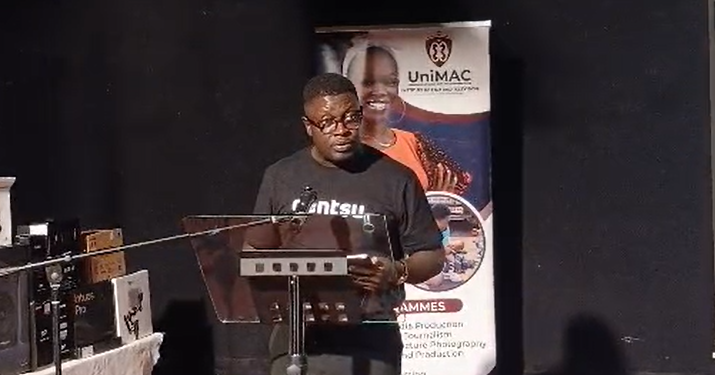
Dentsu Ghana has reaffirmed its commitment to developing Ghana’s next generation of creative talent with a significant donation to the UniMAC Institute of Film & Television (IFT).
The support includes the refurbishment of the Institute’s radio studio and two creative rooms, as well as the donation of 15 computers and other technological equipment to strengthen practical teaching and learning.
The initiative forms part of Dentsu Ghana’s Corporate Social Responsibility agenda, aimed at bridging the gap between academia and industry by providing students with resources needed to thrive in Ghana’s rapidly evolving media and creative sector.
Speaking at the presentation ceremony, Chief Executive Officer of Dentsu Ghana, Andrew Ackach, said the agency believes the future of the communications industry depends on investing in institutions responsible for developing the next generation of talent.
“The communications industry is evolving rapidly, and preparing students for that future requires more than theory. By supporting the Institute’s learning environment with modern facilities and equipment, we hope to contribute meaningfully to the development of industry-ready professionals who will shape the future of Ghana’s creative economy.”
UniMAC welcomes partnership
Receiving the donation, Pro Vice-Chancellor of UniMAC, Prof. Winston Kwame Abroampa, expressed appreciation to Dentsu Ghana, describing the support as a timely investment that would enhance students’ practical learning experience and strengthen collaboration between academia and industry.
He encouraged other organisations and industry stakeholders with the capacity to support the Institute to consider similar initiatives.
“Most of the courses we have are practical intensive; however, we lack access to critical infrastructure to support that cause, which is why we are very happy that you’ve come to support us,” he said.
The donation forms part of Dentsu Ghana’s broader efforts to promote education, innovation and talent development within Ghana’s creative ecosystem.
The partnership also highlights the importance of stronger collaboration between industry and academic institutions in equipping students with the practical skills, technology and experience required to succeed in the modern creative economy.
Source: citinews
