



Ghana’s ambition to make artificial intelligence a major driver of economic growth could face a major obstacle from an unexpected source: the persistent damage to the country’s fibre-optic networks.
The National Artificial Intelligence Strategy envisions the use of AI across critical sectors including healthcare, agriculture, education, public services and industry. However, experts warn that achieving these ambitions will depend heavily on reliable digital infrastructure.
Fibre networks serve as the backbone of Ghana’s digital economy, connecting businesses, government institutions, mobile networks, data centres and international gateways. Damage to these networks can disrupt a wide range of services, including business operations, mobile money, government platforms, schools and hospitals.
“AI does not replace infrastructure, it depends on it,” Chief Executive Officer of the Ghana Chamber of Telecommunications, Sylvia Owusu-Ankomah, said at a recent Conversations with Equinix forum.
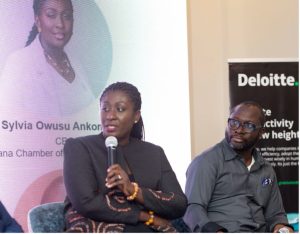
The telecommunications infrastructure has come under increasing pressure in recent years, with fibre cuts recorded across the country.
Between 2021 and 2025, operators recorded thousands of fibre cuts annually. Incidents increased sharply from 3,900 in 2021, which cost about US$7.5 million in repairs, to 10,034 cuts in 2022, resulting in repair costs of approximately US$17.4 million.
Although the number of incidents declined to 6,344 in 2023 and 5,600 in 2024, fibre cuts rose again to more than 8,000 in 2025, with direct repair costs estimated at about US$20 million.
The challenge has continued into 2026. Industry data for the first half of the year recorded 4,289 fibre cuts, putting the country on course to exceed 8,000 incidents by the end of the year if significant measures are not implemented.
Overall, telecommunications operators spent more than US$69 million repairing damaged fibre between 2021 and 2025.
Such expenditure, the industry argues, could otherwise have been directed towards expanding network coverage, improving service quality, increasing data-centre capacity and developing the infrastructure needed to support Ghana’s growing digital economy.
The problem is particularly significant as the country undertakes major road and other infrastructure projects. Road construction often involves excavation, drainage works and the relocation of utilities, creating risks for buried fibre networks when projects are not properly coordinated.
Fibre installed on overhead poles can also be damaged during construction activities.
The telecommunications industry is not opposed to road development but is calling for digital infrastructure to be considered alongside physical infrastructure during project planning.
This would require authorities and contractors to identify existing fibre routes before excavation begins, engage telecommunications operators and relevant institutions, and incorporate digital infrastructure into the design of future projects.
One proposed solution is the Dig Once Policy, which would involve installing empty fibre ducts and other digital infrastructure as part of new road construction and major rehabilitation projects.
The approach would allow roads to be constructed once while creating space for the digital networks that will be required in the future.
Ghana’s AI strategy provides an opportunity for the country to strengthen its position in the global digital economy. However, achieving that goal will require more than policies and algorithms.
AI systems will depend on data centres, cloud infrastructure, reliable electricity, international connectivity and resilient telecommunications networks.
The debate, therefore, should not be framed as a choice between roads and fibre.
Ghana needs both—and protecting the digital infrastructure already in place could be just as important as building the infrastructure of tomorrow.
Source: GCT News Desk
