



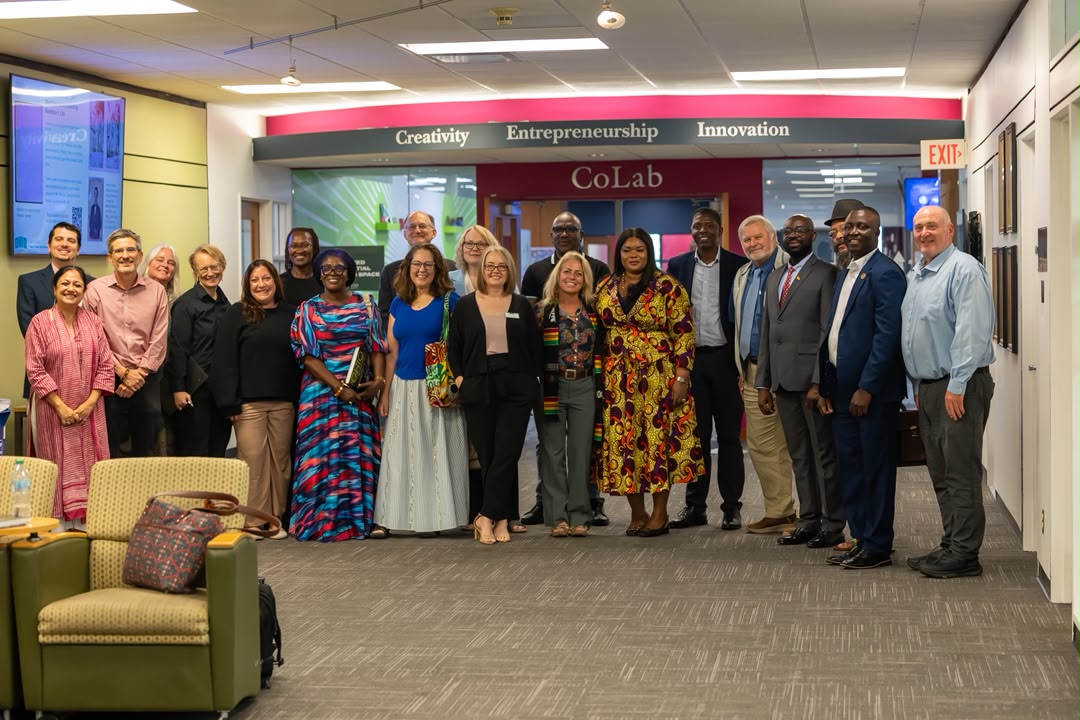
Ghana’s National Service Authority (NSA) has signed a Memorandum of Understanding (MOU) with Ohio University in the United States as part of efforts to transform National Service into a stronger bridge between higher education and the world of work.
The agreement establishes a framework for cooperation between the two institutions and is expected to pave the way for a major workforce-readiness and professional-development initiative aimed at equipping Ghanaian graduates with practical skills for an increasingly digital and competitive global economy.
The partnership comes amid growing concerns among governments, universities and employers about how to ensure that academic qualifications translate into workplace readiness, productivity, innovation and sustainable employment.
Under the proposed initiative, the NSA and Ohio University plan to develop a structured professional-development system that goes beyond traditional orientation programmes.
Key areas will include professional communication and business writing, digital workplace competencies, responsible use of artificial intelligence and emerging technologies, workplace ethics, teamwork, project management, problem-solving, career development, leadership and entrepreneurship.
The long-term vision also includes a train-the-trainer model that will progressively develop a national network of facilitators and Master Trainers capable of sustaining and expanding the programme in Ghana.
The model is designed to promote Ghanaian ownership and sustainability, with Ohio University expected to provide expertise in curriculum development, trainer preparation, specialised technical support, evaluation and quality assurance.
Speaking at the signing ceremony, the Director-General of the NSA said the partnership represents a broader commitment to preparing young people not only for National Service but also for the changing demands of the workplace.
“Today is more than the signing of an MOU. It is the beginning of a shared commitment to prepare Ghana’s young people not only for National Service, but for the future of work. Our ambition is that National Service Personnel leave their service more skilled, more confident, more employable and better prepared to contribute to Ghana’s development.”
The partnership will also provide opportunities to benchmark aspects of Ghana’s workforce-readiness programmes against international practices while ensuring that the eventual model remains responsive to Ghana’s institutions, employers, economic priorities and young people.
From Agreement to Implementation
The signed MOU serves as an institutional framework for cooperation. Specific programmes under the agreement will be developed through separate activity agreements outlining implementation responsibilities, budgets, funding arrangements and other operational requirements.
An initial inception and demonstration phase is expected to help the partners validate the programme structure, engage trainers, assess existing training conditions and establish evidence for a broader implementation plan.
Over time, the initiative could include a common workforce-readiness curriculum alongside specialised professional pathways in areas such as health and human services, government and public service, education, business and entrepreneurship, technology and the digital economy, agriculture, and international development.

Building a Globally Competitive Workforce
For the NSA, the partnership presents an opportunity to increase the developmental value of National Service.
Every year, tertiary graduates transition from academic institutions into workplaces through National Service. The programme therefore provides a national platform for strengthening the competencies graduates need to perform effectively in professional environments and transition into employment, entrepreneurship, leadership or further education.
The initiative seeks to position National Service as an important platform for developing globally competitive Ghanaian professionals.
It also reflects growing international recognition that workforce development requires stronger collaboration among governments, universities, employers and industry, particularly as artificial intelligence and emerging technologies continue to reshape jobs and workplace expectations.

A Partnership Focused on Sustainability
A key element of the proposed partnership is the transfer of institutional capacity.
Ohio University is expected to provide expertise in areas such as programme design, curriculum development, trainer preparation, specialised content, evaluation and quality assurance, while implementation capacity is progressively transferred to Ghanaian trainers and institutions.
The ultimate measure of the initiative, therefore, will not simply be the number of workshops conducted or certificates issued, but the sustainable professional-development capacity established in Ghana.
The signing marks the beginning of a partnership aimed at strengthening the connection between higher education, National Service and the future of work while creating opportunities for a new generation of Ghanaian professionals.
Source: MGD news
