


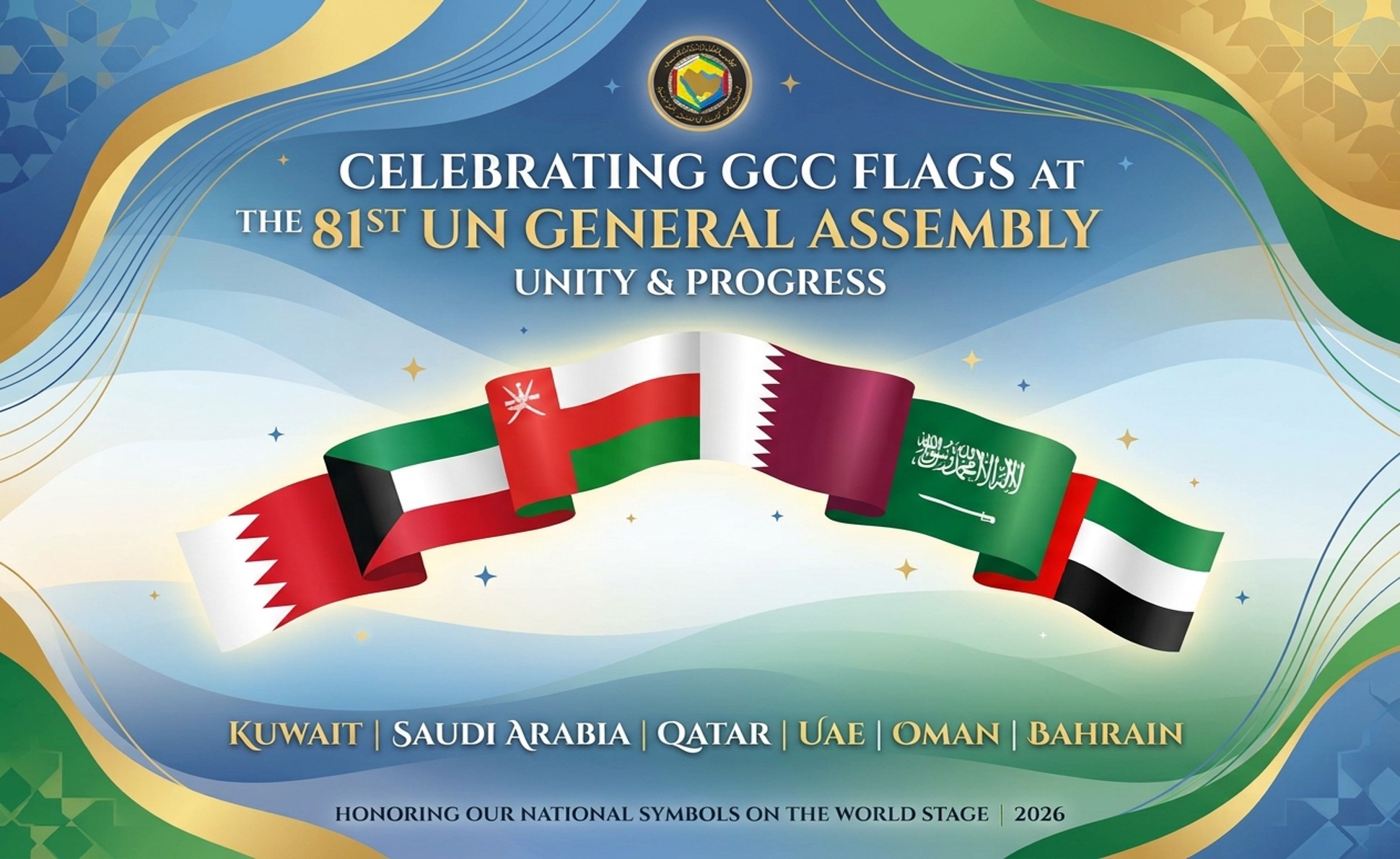
The 81st Session of the United Nations General Assembly (UNGA 81) convened in New York at a critical juncture for the Middle East. Against the backdrop of complex regional security challenges, ongoing efforts at economic diversification, and the urgent demands of global climate action, the member states of the Gulf Cooperation Council (GCC) presented a largely unified front while highlighting their individual national priorities.
From pushing for regional stability and conflict resolution to championing sustainable energy transitions, here is a breakdown of what every Gulf nation’s representative said, what they intend to do, and what they are currently doing on the world stage.
Qatar
Key Focus: Conflict Mediation, Humanitarian Aid, and International Law
What They Said:
The Qatari delegation emphasized Doha’s unwavering commitment to preventive diplomacy and political mediation. Qatar reiterated that long-term regional stability cannot be achieved through military escalation, calling on the international community to enforce international law, protect civilian lives, and address the root causes of conflicts in the Middle East particularly emphasizing a just resolution for the Palestinian issue based on a two-state solution.
What They Intend to Do:
Qatar pledged to continue leveraging its diplomatic channels to mediate ongoing regional disputes, scale up funding for international humanitarian agencies, and expand its global partnerships in soft diplomacy and education.
What They Are Doing:
Doha remains one of the world’s leading diplomatic intermediaries, actively facilitating high-stakes negotiations, providing substantial relief aid across crisis zones, and investing heavily in international development programs through the Qatar Fund for Development (QFFD).
United Arab Emirates (UAE)
Key Focus: Tech Governance, De-escalation, and Future-Oriented Diplomacy
What They Said:
The UAE representative focused on the intersection of regional security, economic integration, and emerging technologies. The Emirates highlighted the necessity of global standards for Artificial Intelligence (AI) and advanced technology governance, warning against the risks of technology falling into the hands of non-state actors. Simultaneously, the UAE stressed the importance of pragmatic diplomacy, de-escalation, and economic partnerships across borders.
What They Intend to Do:
The UAE plans to establish itself as a global hub for responsible AI development, advance regional economic integration initiatives, and expand its humanitarian footprint in climate-resilient development.
What They Are Doing:
Building on its post-COP28 commitments, the UAE is pouring billions into renewable energy projects worldwide, deploying cutting-edge technology in logistics and trade, and maintaining diplomatic outreach across divergent geopolitical blocs.
Saudi Arabia
Key Focus: Regional Stabilization, Vision 2030, and Multilateralism
What They Said:
The Saudi delegation underlined the Kingdom’s role as an anchor of political and economic stability in the region. Saudi Arabia reaffirmed its leadership in driving Middle Eastern peace initiatives, maintaining stable global energy markets during transitions, and pushing for comprehensive political settlements in Yemen and the broader region.
What They Intend to Do:
Riyadh intends to accelerate its economic transformation under Vision 2030, host major international summits, expand its investments in global clean energy tech, and continue leading diplomatic initiatives aimed at regional normalization and conflict reduction.
What They Are Doing:
Saudi Arabia is executing large-scale infrastructure and giga projects, spearheading the Middle East Green Initiative, and leveraging its diplomatic weight to mediate conflicts and maintain balance within global energy networks (OPEC+).
Oman
Key Focus: Quiet Diplomacy, Peaceful Coexistence, and Sustainable Growth
What They Said:
True to its foreign policy legacy, Oman’s representative delivered a message centered on non-interference, peaceful coexistence, and dialogue. Muscat called for renewed international commitment to peaceful dispute resolution, emphasizing that sustainable economic development is impossible without regional tranquility.
What They Intend to Do:
Oman aims to strengthen its position as a trusted, neutral facilitator for regional dialogue while advancing its Oman Vision 2040 targets, particularly around green hydrogen export markets.
What They Are Doing:
Muscat actively hosts discreet back-channel talks for regional parties, expands its green energy infrastructure, and modernizes its economy through logistics and maritime trade expansion.
Bahrain
Key Focus: Regional Coexistence, Maritime Security, and Economic Diversification
What They Said:
Bahrain highlighted the imperative of safeguarding maritime trade routes, combating extremism, and promoting interfaith tolerance and peaceful coexistence. Manama called for stronger multilateral mechanisms to guarantee freedom of navigation and secure strategic waterways critical to global commerce.
What They Intend to Do:
Bahrain plans to expand its regional security partnerships, deepen international economic ties, and continue implementing its Economic Vision 2030 to diversify away from hydrocarbons.
What They Are Doing:
Bahrain continues to play a central role in regional maritime security coalitions, host major international dialogue forums (such as the Manama Dialogue), and invest in finance, tech, and tourism sectors.
Kuwait
Key Focus: Constitutional Democracy, Humanitarian Leadership, and Regional Sovereignty
What They Said:
Kuwait’s speech focused on strict adherence to the UN Charter, respect for national sovereignty, and international law. The representative underscored Kuwait’s historical commitment to humanitarian assistance and called for structural reforms within global governance institutions to better represent developing nations.
What They Intend to Do:
Kuwait intends to revamp its domestic economic strategy (New Kuwait 2035), strengthen its global humanitarian outreach, and maintain a balanced, principle-based foreign policy.
What They Are Doing:
Kuwait remains a major donor to UN humanitarian efforts, actively works to maintain internal institutional stability, and invests heavily in upgrading its energy production infrastructure alongside renewable energy pilot projects.
Summary of the Gulf Consensus
While each GCC state brought its specific priorities to UNGA 81, a clear common thread ran through their collective statements:
De-escalation First
The Gulf states prioritized regional de-escalation by stressing that ongoing conflicts cannot be resolved through military force, advocating instead for political dialogue, ceasefire enforcement, and strict adherence to international law. They collectively reaffirmed their support for the two-state solution to resolve the Israeli-Palestinian crisis, highlighted the imperative of preserving national sovereignty, and called for coordinated efforts to prevent regional spillover, protect civilian populations, and safeguard critical maritime routes essential for global stability.
Economic Pragmatism
Economic transition remains central to the GCC agenda, with member states framing sustainable national development as dependent on regional stability. The delegations emphasized their ongoing efforts to diversify away from hydrocarbons by building robust non-oil sectors, expanding international trade networks, and fostering innovation. They positioned the Gulf region as an interconnected global hub for finance, tourism, logistics, and emerging technology governance, while advocating for flexible economic partnerships that bridge developing and developed markets.
Energy Transition Leadership
Addressing climate realities, the Gulf states articulated a balanced approach to the global energy transition that weighs sustainability against supply security. They highlighted major investments in green hydrogen, solar power, and carbon capture technologies to meet net-zero targets. Simultaneously, representatives emphasized the need to maintain reliable traditional energy production during the transition, urging the global community to adopt pragmatic, tech-driven climate strategies rather than abrupt fossil fuel divestment.
Gulf-Africa Diplomacy at UNGA 81: Bilateral Engagements and Regional Partnerships
During the 81st Session of the United Nations General Assembly (UNGA 81), several members of the Gulf Cooperation Council (GCC) actively engaged in diplomatic discussions and bilateral meetings with African representatives and regional bodies. These discussions centered on humanitarian aid, regional peacebuilding, economic investment, and global health initiatives.
United Arab Emirates (UAE)
The UAE delegation led by Deputy Prime Minister and Minister of Foreign Affairs Sheikh Abdullah bin Zayed Al Nahyan, alongside key Ministers of State conducted multiple bilateral and multilateral engagements with African counterparts:
Sudan & AU Peace Initiatives
H.E. Sheikh Shakhboot bin Nahyan Al Nahyan, Minister of State (who leads the UAE’s African affairs portfolio), participated in a high-level roundtable on the humanitarian and political crisis in Sudan. Co-convened by the African Union Permanent Observer Mission alongside the Quad/Quintet representatives, the meeting focused on advancing an immediate ceasefire, unhindered humanitarian access, and diplomatic de-escalation.
Education & Finance Co-Initiatives (Nigeria & Italy)
H.E. Reem Al Hashimy, Minister of State for International Cooperation, engaged in the Multiply Possibility High-Level Event: A New Era for Education Financing. This major global initiative was co-led by Nigeria and Italy in cooperation with the Global Partnership for Education, aiming to unlock sustainable capital for education infrastructure across Africa.
Saudi Arabia
Saudi Arabia engaged with African delegations both bilaterally and through key multilateral frameworks hosted during the High-Level Week:
OIC & Joint Arab-Islamic African Engagements
Representing the Kingdom, Saudi diplomats met with African member states of the Organization of Islamic Cooperation (OIC) including representatives from Nigeria, Egypt, and Somalia during the OIC Annual Coordination Meeting on the UNGA sidelines.
Global Alliance for the Two-State Solution
Saudi Arabia co-hosted a high-level ministerial summit alongside the European Union, the Arab League, and African partner nations (such as Nigeria and Egypt). The discussions focused on aligning Arab-African diplomatic leverage to support political stability and humanitarian aid delivery in the Middle East.
Qatar
Qatar’s UNGA 81 agenda heavily focused on mediation, humanitarian relief, and peacebuilding efforts, with a particular focus on the Horn of Africa:
Sudan & Horn of Africa Security
Foreign Ministry representatives from Qatar held bilateral side-talks with diplomatic representatives from Sudan and neighboring East African partners to review peace facilitation efforts, civil protection, and logistics for channeling emergency humanitarian aid to displaced populations.
Development & Education Outreach
Qatari officials engaged with African delegations under the auspices of the Qatar Fund for Development (QFFD) to assess current projects and initiate prospective funding partnerships in clean water access, education, and health sector resilience across Sub-Saharan Africa.
Kuwait, Oman, and Bahrain
While Bahrain, Oman, and Kuwait focused their primary bilateral efforts on ASEAN, European Union, and multilateral UN reform dialogues, their diplomatic leadership engaged African nations through broader ministerial caucuses:
GCC-African Diplomatic Consultations
Representatives from Oman, Bahrain, and Kuwait participated in joint ministerial briefings alongside the GCC Secretary-General, Jasem Mohamed Albudaiwi. These sessions reviewed diplomatic coordination with African regional bodies on economic investments, maritime route security (particularly off the Horn of Africa and the Red Sea), and shared global governance initiatives.