



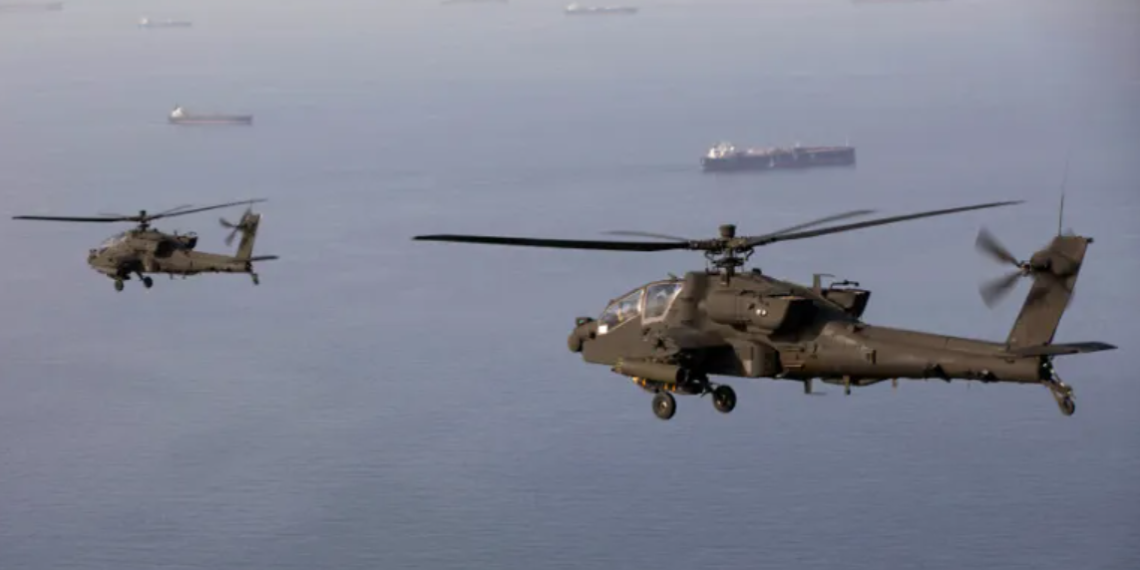
According to the U.S. military, the strikes began late Tuesday and were carried out as a “proportional response to unjustified Iranian aggression” after the helicopter was brought down while conducting patrol operations near the strategic waterway.
President Donald Trump blamed Iran for the incident, stating that the helicopter had been shot down during a routine patrol mission. He indicated that the United States would respond to the attack, while confirming that both crew members were safely rescued and suffered no injuries.
Reports indicate that the helicopter went down near the coast of Oman, and the two pilots were rescued within hours through a military operation that involved an unmanned maritime rescue system.
Iranian state media reported explosions in several locations, including Qeshm Island, Sirik, Jask, and Bandar Abbas, following the U.S. strikes. Meanwhile, Iran’s Foreign Minister, Abbas Araghchi, warned that Iranian forces would not leave any attack unanswered and urged foreign military forces to leave the region if they wished to remain safe.
The latest developments have further strained a fragile ceasefire that has been in place for several weeks and have cast doubt on ongoing diplomatic efforts aimed at securing a broader agreement between Washington and Tehran.
Prior to the incident, President Trump had expressed optimism that negotiations with Iran could produce a breakthrough agreement within days. However, key differences remain, particularly over Iran’s stockpile of enriched uranium and Tehran’s demand for sanctions relief and access to frozen assets.
Analysts warn that the renewed exchange of military action could further disrupt regional stability, affect global energy markets, and complicate diplomatic efforts to achieve a lasting settlement between the two countries. The Strait of Hormuz remains one of the world’s most important oil transit routes, making any escalation in the area a matter of international concern.
Source: citinews
