



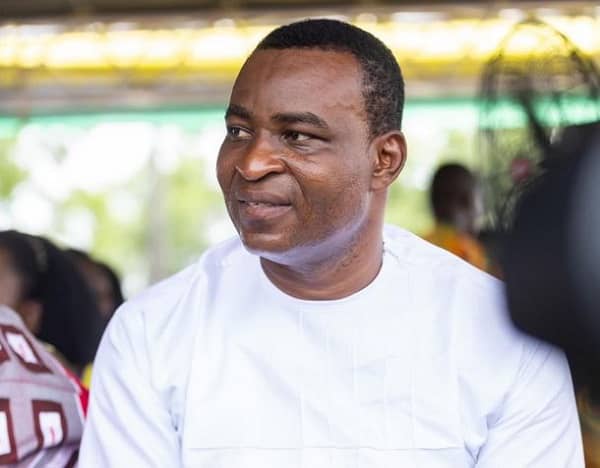
I was greeted by the news that Chairman Wontumi, the Ashanti regional chairman of the New Patriotic Party has been sentenced to twenty years in prison for his role in a corrupt mining project. As expected, the verdict is greeted with despair and glee from the two sides of the partisan divide. Personally, I am happy that some accountability and sanity is being restored to Ghana’s governance system.
Yet at the same time, I am wondering whether this is a system reset that will endure over time, or if it is an easy prosecution of a political opponent. No doubt the two groups of partisans are celebrating and mourning. But what should a patriot do? Should they laugh or cry?
This is a question I asked myself, but which received no clear answers. Some hail this as a moment of accountability and retribution for the devastating menace of irresponsible illegal mining. Many others celebrate the fact that our political leaders can no longer commit crimes with impunity.
The scourge of corruption, shielded by the authorities, has ravaged this our beloved country for so long. I was tempted to agree with this group.
But then I remember that this is not the first time a high-ranking politician has been jailed in this Fourth Republican Dispensation. Victor Selormey who died in prison readily come to mind, so too do Kwame Peprah and Tsatsu Tsikata. Those cases did not cement rule of law. Instead, then, as now, supporters aligned with the political party of the alleged culprit chant political witch-hunt and promise retribution while others celebrate accountability. What then makes Wontumi’s case different from the others? Why must it be celebrated as a watershed moment for rule of law?
Does Ghana’s justice system inspire confidence?
The answer to the above question lies in an independent justice system that acts outside of partisan noises. The clamor by Ghanaians for accountability and justice in our governance was loud and clear in the 2024 general elections and must be answered. But it is hard to judge if this ruling is a genuine answer to that outcry. Had the former Chief Justice not been changed, this outcome for Chairman Wontumi will not be imaginable.
Yet, while the actions of the former Chief Justice provoked genuine outcries of constitutional tyranny from both civil society and Ghana’s voices of conscience, it is not yet clear if her removal has restored independence and dignity to the judiciary. The continuous harassment of speech in the country with complicity of our judiciary raises many eyebrows, just as the blatant and capricious release of Agradaa from jail. Can our justice system then inspire confidence and convince the skeptic that corruption trials are completely free from partisan bias? Can they serve as the filter between the noise of political victimization and genuine accountability?
Why a genuine institutional reset is not yet evident?
The above questions can only be answered when our justice system functions as independent institution serving the sole national interests. I have written in the past about what it takes to build the rule of law, and an extensive elaboration of that concept is not the aim of this article. However, chopping and changing the personnel of the justice system will not suffice to inspire confidence nor ensure rule of law.
On the contrary, what we are likely to continue seeing is a chaotic cycle where each government attempts to replace the Chief Justice, pack the Supreme Court with loyalists and try to control our justice system in partisan directions. A true reset should instill stability and confidence in our justice system for all manner of Ghanaians, regardless of political affiliation or social status. But a legacy of chaotic maneuvers for control of the judiciary is hardly the way to do it.
But when our justice system is an outcome of desperate maneuvers for political control, their verdicts, including what was delivered on Chairman Wontumi can never rise above partisan noises. Ghanaians are indeed hungry for accountable governance and retribution for corrupt government officials.
But without a justice system that all can trust, there is no guarantee that their cries are being genuinely answered. On the contrary, my genuine fear is that Ghanaian governments, without a proper institutional reset, may continue to pick low hanging fruits to prosecutewhile leaving untouched several big fishes in Ghana’s saturated waters of corruption, in government, the opposition or elsewhere.
The path forward
While it will take volumes of writeups to outline the path to a true reset, the blueprints for restoring the confidence in our justice system are already there. If Chairman Wontumi had been prosecuted by the independent Office of the Special Prosecutor (OSP), who, by the way, was appointed by the NPP government, partisan voices will find no justification. This highlights the importance of the OSP if its independence and prosecutorial powers can be enhanced.
Furthermore, reclaiming the independence of our judiciary from executive control is paramount. I do not personally shed any tears for the ex-Chief Justice who was removed. But it still sets a precedent that can lead to instability in the tenure of Chief Justices. That loophole along with packing of a bloated court to serve partisan interests must be addressed.
In addition, the excessive powers of the current Chief Justices in the currentdispensation gives room for capriciousness. Such arbitrariness, which is an effrontery to rule of law must be addressed. Ordinary citizens too, of course, have their role to play. As I have written before, no laws or institutional safeguards can suffice to produce rule of law if both ordinary citizens who elect leaders, and officials in authority have zero commitment to the highest order of natural justice and common sense.
Regardless, structural reset is a way to start. To this end, the NDC government promised to deliver Ghanaians a reset and Ghanaians responded by giving them an unprecedented super majority in parliament. They have all the tools for a true reset. It does not appear though that they have touched the tools yet.
I shed no tears at all for Chairman Wontumi. But until trust is restored in our justice system, his jailing will represent no change to the status quo. At best, it may represent scratching at the surface of an entire edifice of institutional corruption or perpetuation of a cycle where each new government jails low hanging fruits of the opposition as a revenge. Neither of that augur well for rule of law. It is for this reason that I do not know whether I should cry or laugh.
The writer, Prosper Kofi Senyo, is a doctoral candidate in the School of Journalism at Michigan State University. You can reach him at senyopro@msu.edu
