



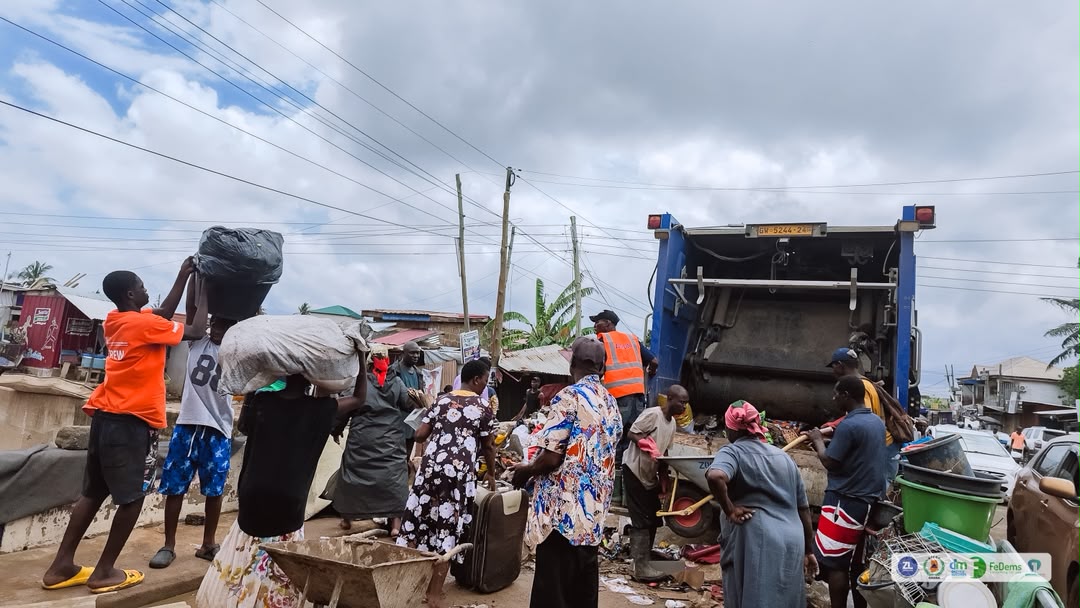
The National Disaster Management Organisation (NADMO), in partnership with Zoomlion Ghana Limited and other collaborating institutions, on Wednesday, July 1, intensified flood preparedness efforts with a large-scale drain-clearing exercise at several flood-prone locations across the Greater Accra Region.
The operation is intended to improve the free flow of stormwater, reduce blocked drainage channels and minimise the risk of flooding ahead of the next expected rains.
The exercise forms part of the 12-week “No Do No Do” campaign launched last month to promote environmental responsibility, strengthen flood preparedness and complement public education with practical interventions. Under the initiative, NADMO and its partners are conducting post-flood assessments, desilting drains and encouraging residents to stop indiscriminate dumping of refuse into drainage systems.
Addressing the media during the exercise, Greater Accra Regional Director of NADMO, Dennis Nartey, said the campaign was introduced in response to the growing impact of poor waste disposal on flooding across the region.
He explained that following every major rainfall, NADMO undertakes post-flood assessments to identify drains clogged with refuse, silt and debris before deploying teams to clear them ahead of subsequent rains.
Mr. Nartey said the latest exercise was prompted by the recent floods that displaced residents and left substantial quantities of waste trapped in drainage channels, making immediate desilting necessary.
The clean-up operation began at Okponglo and was carried out simultaneously at about six flood-prone locations, including Tema East, Tema West, Alajo, Santa Maria and Ablekuma. He noted that the operational areas were selected based on recurring flood incidents and findings from recent post-flood assessments.
Speaking on behalf of Zoomlion Ghana Limited, Greater Accra General Manager Ernest Morgan Acquah said the company joined the exercise to remove large volumes of waste and debris deposited by the floods, particularly in severely affected communities such as Alajo.
He explained that beyond restoring cleanliness, the intervention is aimed at reducing public health risks and ensuring drainage systems remain clear ahead of future rainfall, adding that the immediate focus is to support affected communities rather than apportion blame.
Mr. Nartey disclosed that blocked drains at the Okponglo stretch had caused floodwaters to spill onto sections of the road, creating dangerous conditions for motorists.
He revealed that two road traffic crashes occurred in the area after drivers unknowingly entered flooded sections of the roadway following the recent rains, underscoring the urgency of the exercise.
While describing drain clearing and desilting as essential emergency interventions, Mr. Nartey stressed that they cannot provide a lasting solution unless residents change their waste disposal habits.
He therefore urged the public to stop dumping refuse into drains and called on Metropolitan, Municipal and District Assemblies to rigorously enforce sanitation by-laws, including prosecuting offenders to deter illegal dumping.
According to him, human activities account for nearly 50 per cent of flooding in Accra despite significant government investment in expanding drainage infrastructure.
He noted that drains designed to carry large volumes of stormwater quickly lose their effectiveness when blocked with refuse, resulting in overflow into surrounding communities during heavy rainfall.
On calls for the declaration of a state of emergency over recurring floods, Mr. Nartey said the more pressing priority is the removal of illegal structures on waterways and flood retention areas.
He urged government to demonstrate the political will to reclaim encroached drainage corridors and retention basins, describing such measures as a more sustainable solution to Accra’s perennial flooding challenge.
Mr. Nartey commended Zoomlion Ghana Limited, the Jospong Group of Companies, Dredge Masters, FeDems and other partners for providing equipment, logistics and technical support, while NADMO deployed personnel to execute the operations.
He expressed confidence that sustained collaboration between government agencies, private sector partners and local communities under the “No Do No Do” campaign would significantly improve drainage systems, promote responsible environmental practices and strengthen Greater Accra’s resilience against future flooding.
Source: citinews
